This article is intended to be read alongside Alternative Strategies to Restrictive Practices in Aged Care.
Restrictive practices are ethical, legal, and clinical violations of fundamental human rights that may lead to poor care outcomes (VIC DoH 2025).
As much as possible, registered aged care service providers should aim to create and maintain a restrictive practice-free environment. This is the recommended standard of care and will prevent older people from suffering unnecessary harm and trauma (VIC DoH 2025b).
What Is a Restrictive Practice?
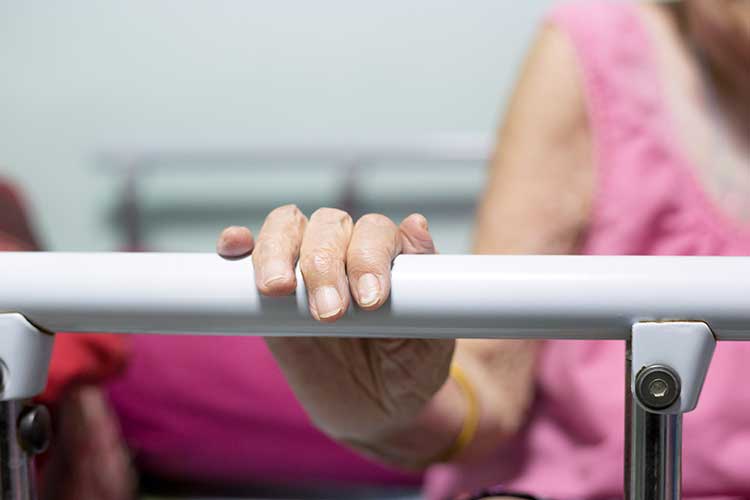
The Aged Care Act 2024 defines a restrictive practice as 'any practice or intervention that restricts someone’s rights or freedom of movement'.
There are five types of restrictive practices:
1. Seclusion
Seclusion involves confining an older person alone in a room or physical space at any hour of the day or night, preventing them from leaving or implying that they cannot leave voluntarily, for the purpose of influencing their behaviour. Examples of seclusion include:
- Locking an older person in a room or an area of the facility
- Staff or residents purposely moving to other rooms where the older person cannot follow
- Instructing an older person to an area of the facility with the belief that they cannot leave
- Imposing a ‘time out’.
(ACQSC 2021; DHDA 2026)
An older person freely choosing to retreat to their room and lock their door does not constitute seclusion, nor do isolation requirements imposed by state and territory public health departments.
Seclusion is an extreme practice that violates an older person's dignity and rights. It should never be used as punishment and may only be considered once all other restrictive practice alternatives have been exhausted (DHDA 2026).
2. Chemical Restraint
Chemical restraint is the use of medications or chemical substances to influence a person’s behaviour. This does not include medications that have been prescribed by a medical practitioner to treat a mental illness, physical condition or end-of-life care (ACQSC 2021). Examples of chemical restraint include:
- Use of psychotropic medications such as antidepressants, antihypnotics (e.g. benzodiazepines) and antipsychotics.
(DHDA 2026)
3. Mechanical Restraint
Mechanical restraint is the use of devices to restrict, prevent or limit an older person’s movement for the purpose of influencing their behaviour (DHDA 2026). Examples of mechanical restraint include:
- Using bed rails, tray tables, lap belts, and harnesses
- Using restrictive clothing, splints, and gloves
- Using straps to restrain any body part.
(ACQSC 2021; DHDA 2026)
Devices used by the older person for therapeutic or non-behavioural purposes, such as wheelchairs/splints/casts for broken bones, are not considered a form of mechanical restraint.
4. Physical Restraint
Physical restraint is the use of physical force to prevent, restrict or limit subdue the movement of an older person’s body for the purpose of influencing their behaviour (DHDA 2026). Examples of physical restraint include:
- Pulling or pushing an older person in a direction they do not wish to go
- Physically holding or pinning an older person down to administer medication.
(DHDA 2026)
Assisting older people with daily living and therapeutic activities such as getting dressed, shaving, brushing teeth, or carrying out physiotherapy exercises does not constitute physical restraint (DHDA 2026).
5. Environmental Restraint
Environmental restraint involves restricting an older person’s free access to environments, items or activities for the purpose of influencing their behaviour (DHDA 2026). Examples of environmental restraint include:
- Removing access to an older person’s walking aid
- Removing access to activities such as watching television, making a cup of tea/coffee
- Removing access to cutlery, mobile phones, and locking away items in cupboards/drawers
- Requiring a special code to open a door.
(ACQSC 2021; DHDA 2026)
While environmental restrictions are often put in place to protect one older person, they can unintentionally affect the rights of others. For this reason, any such restriction should be evaluated not just for its impact on a single individual, but for how it affects all older people who share that environment or access the same resources and activities (DHDA 2026).
For more clarification on what is and isn’t considered a restrictive practice, view the following resource from the Aged Care Quality and Safety Commission: Restrictive Practices Scenarios
Why are Restrictive Practices Harmful?
Restrictive practices may exacerbate an older person's trauma or inflict physical or emotional harm, posing a profound risk to their safety and wellbeing and even increasing their risk of death (RCACQS 2019).
Potential adverse effects of restrictive practices may include:
- Feelings of fear, shame, loss of dignity, agitation, or depression
- Reduced cognitive performance
- Physical impacts such as bruises, skin injury, pressure injury, respiratory complications, incontinence, constipation, malnutrition, reduced muscle strength and respiratory complications
- Reduced mobility and increased dependence on others
- Serious injury or death
- Increased falls risk
- Cognitive impairment or confusion.
(RCACQS 2019)

When are Restrictive Practices Permitted?
Restrictive practices must only be used as a last resort to protect the older person, yourself, or others from harm. They must be used in the least restrictive form possible, and only after considering the likely impact on the person (DHDA 2026).
There are strict requirements that must be met in order for a restrictive practice to be used lawfully in a residential aged care setting:
- The restrictive practice must be used as a last resort to prevent harm, after considering the likely impact on the person
- The restrictive practice must be used in the least-restrictive form, for the shortest amount of time possible
- The restrictive practice must be proportionate to the perceived risk of harm
- Alternative strategies to restrictive practices must be attempted first; these must be documented, along with why they have not been successful
- The restrictive practice must be deemed necessary by an approved health practitioner after undertaking an assessment of the older person; this must be documented
- In the case of chemical restraint, the medicine used must have been prescribed by an appropriately qualified health practitioner who has documented the reason for this prescription
- Informed consent must be given by the person or their restrictive practices substitute decision-maker
- The use of restrictive practices must be regularly reviewed and removed as soon as possible
- When the restrictive practice is being used, the person must be regularly monitored for distress, harm, adverse events, changes in wellbeing and ability to perform daily living activities
- Registered providers must have a Behaviour Support Plan (BSP) in place for all individuals who:
- Display changed behaviours
- Are being assessed to see if restrictive practices may be needed
- Are experiencing a restrictive practice
- As a therapeutic intervention
- In response to boredom
- In response to illness
- In response to anxiety or distress
- To compensate for staff shortages
- As a substitute for less restrictive alternatives
- As punishment, threat or discipline
- For the convenience of staff.
- The provider must inform the restrictive practices substitute decision-maker of the use of the practice as soon as practicable and record that this notification has been made.
- The following must also be documented in the individual’s care and services plan:
- The individual’s behaviours that led to the need for a restrictive practice
- Any alternatives to the restrictive practice that were considered or used (if any)
- The reasons why the restrictive practice was necessary
- The care to be provided to the client in relation to their behaviour
- All relevant assessments, information and decisions in relation to the use of the restrictive practice
- Any additional advice or support to be sought.
- Once the emergency is over, the provider must revert to usual restrictive practice policies and procedures
- The registered provider must seek to employ the least restrictive form of restrictive practice and for the shortest possible time
- The registered provider must continue to monitor the use of the restrictive practice to decide whether an alternative strategy can be used or the restrictive practice can be ceased.
- Legal obligations governing when and how restrictive practices may be used
- Mandatory reporting of misuse through the Serious Incident Response Scheme (SIRS)
- Monitoring and reporting on the use of most restrictive practices (excluding chemical restraint) via the National Aged Care Quality Indicator Program (QI Program)
- Compliance with the Strengthened Aged Care Quality Standards.
- Nominee — a person or group appointed directly by the older person themselves
- Partner — the older person's spouse or life partner
- Relative or friend (carer) — a family member or friend who previously provided care
- Relative or friend (non-carer) — a family member or friend without a prior caring role
- Medical treatment authority — an individual or body appointed in writing under the law of the state/territory to act in the best interests of the older person who is unable to make decisions for themselves.
- Only used as a last resort
- Used in the least restrictive form and for the shortest length of time possible
- Used with the older person’s informed consent
- Monitored and regularly assessed.
Restrictive practices should never be used:
(VIC DoH 2025a; Melbourne Social Equity Institute 2014; QLD DoH 2016)
Emergency Use of Restrictive Practices
In rare and unexpected emergencies, providers are permitted to use a restrictive practice.
An emergency scenario is defined as a serious or dangerous situation that is unanticipated or unforeseen and requires immediate action (ACQSC 2021).
In these emergencies, restrictive practices may be used with exemption from certain requirements such as consent. However, the emergency use of restrictive practices may still only be employed under the following conditions:
(ACQSC 2021, 2023b)
Restrictive Practices and Legislation
The Aged Care Act 2024 and The Aged Care Rules 2025 establish a framework to oversee and improve how restrictive practices are managed across Australian Government-funded residential aged care services.
Key protections in place include:
(DHDA 2026)
The Aged Care Rules 2025 establish a clear hierarchy of persons and bodies authorised for providing informed consent when restrictive practices are necessary and an older person is either unable to consent or has not yet been appointed a restrictive practices substitute decision-maker (RPSDM).
This hierarchy comprises five levels:
(DHDA 2026)
Further guidance on the hierarchy and responsibilties of an RPSDM are also set out in the Quality of Care Amendment (Restrictive Practices) Principles 2022 (ACQSC 2023a).
Restrictive Practices Under the Strengthened Aged Care Quality Standards
Standard 3: The care and services - Outcome 3.2: Delivery of care and services (Action 3.2.7) under the Strengthened Aged Care Quality Standards advises that the use of restrictive practices is minimised as much as possible and that when restrictive practices are used, they are:
(DHDA 2025)
Conclusion
Restrictive practices are interventions that should only be used as a last resort.
Remember that these practices are highly distressing and may cause or exacerbate trauma. Your goal should be to minimise and hopefully prevent restrictive practices as much as possible.
Always refer to your state or territory’s legislation, as well as your organisation’s policies and procedures.
Test Your Knowledge
Question 1 of 3
David, who uses a walker, tries to wander outside in freezing weather. To prevent harm, his caregiver temporarily places the walker in a locked storage room until the outside temperature rises. What type of restrictive practice is this?
Topics
Further your knowledge
 FreeFreeFreeFreeFreeFree
References
- Aged Care Quality and Safety Commission 2021, Overview of Restrictive Practices, Australian Government, viewed 22 May 2026, https://www.agedcarequality.gov.au/sites/default/files/media/overview-of-restrictive-practices_0.pdf
- Aged Care Quality and Safety Commission 2023a, Minimising the Use of Restrictive Practices, Australian Government, viewed 22 May 2026, https://www.agedcarequality.gov.au/older-australians/safety-care/minimising-restrictive-practices
- Aged Care Quality and Safety Commission 2023b, RB 2023-22 Regulation of restrictive practices and the role of the Senior Practitioner, Restrictive Practices, Australian Government, viewed 22 May 2026, https://www.agedcarequality.gov.au/resource-library/rb-2023-22-regulation-restrictive-practices-and-role-senior-practitioner-restrictive-practices
- Aged Care Quality and Safety Commission 2025, Standard 3: The care and services, Australian Government, viewed 21 May 2026, https://www.health.gov.au/resources/publications/strengthened-aged-care-quality-standards-august-2025?language=en
- Department of Health, Disability and Ageing 2026 Types of restrictive practices, Australian Government, viewed 21 May 2026, https://www.health.gov.au/resources/publications/types-of-restrictive-practices
- Melbourne Social Equity Institute 2014, Seclusion and Restraint Project Report, University of Melbourne, viewed 21 May 2026, https://socialequity.unimelb.edu.au/__data/assets/pdf_file/0017/2004722/Seclusion-and-Restraint-report.PDF
- Queensland Health 2016, Physical Restraint, Queensland Government, viewed 21 May 2026, https://www.health.qld.gov.au/__data/assets/pdf_file/0027/465174/cpp-physical-restraint.pdf
- Royal Commission into Aged Care Quality and Safety 2019, Restrictive Practices in Residential Aged Care in Australia, Australian Government, viewed 21 May 2026, https://apo.org.au/node/233756
- Victoria Department of Health 2025a, Restrictive practices, Victoria State Government, viewed 21 May 2026, https://www.health.vic.gov.au/sites/default/files/2025-06/restrictive-practice.pdf
- Victoria Department of Health 2025b, Physical Restraint: Standardised Care Process, Victoria State Government, viewed 21 May 2026, https://www.health.vic.gov.au/residential-aged-care/standardised-care-processes