

SwanCare gave almost 500 hours back to care in 90 days by recognising existing workforce knowledge and making mandatory learning more targeted and meaningful. With a pass rate of around 50%, Knowledge Verification is recognising existing knowledge and pinpointing genuine gaps, giving SwanCare a clearer picture of workforce capability than completion rates ever could.
"Completion was never the outcome that we were looking for. Knowledge was."
Jae Smith, Chief Governance & Strategy Officer
499.8
hours given back to care in 90 days
~50%
pass rate, recognising knowledge and finding real gaps
28 of 50
modules with Knowledge Verification enabled
~$16k
in staff time saved, at an industry average hourly cost
Completion was never the outcome. Knowledge was.
For Jae Smith, Chief Governance & Strategy Officer, and Erin Mielens, Learning & Development Manager at SwanCare, The question was not whether staff should continue learning, but what value experienced employees derive from repeatedly completing the same training, and whether a more tailored approach would be more effective.
"We weren't looking to reduce our expectations around learning or compliance," says Jae. "We were looking for a smarter way of meeting them."
That thinking led SwanCare to Knowledge Verification. Within 90 days, staff had saved 499.8 hours of repeated learning, and the comprehension data was showing SwanCare things its completion rates never had.
Giving time back to care
SwanCare provides residential aged care, home care and retirement services in Western Australia. Its Bentley Park campus is a large integrated retirement and aged care community, supporting people across different stages of ageing and care.
About SwanCare
- 4 residential aged care homes in Western Australia
- 400+ residents supported in residential aged care
- ~600 people living independently in its retirement communities
- ~770 people in the SwanCare workforce
Like every aged care provider, SwanCare is operating through significant regulatory change, with rising expectations around governance, quality, workforce capability and demonstrating compliance. Jae was conscious of the cumulative burden that places on staff.
"Every compliance requirement might be perfectly reasonable on its own, but collectively they take time," she explains. "And ultimately that time has to come from somewhere."
The question SwanCare set itself was how to keep strong assurance that staff have the knowledge they need, without unnecessarily taking experienced people away from care and services. That is where the idea of giving time back to care came from.

When annual training means repeating what you already know
Before Knowledge Verification, annual mandatory training at SwanCare ran on a completion-based model. Staff went back through the full module every year, regardless of how experienced they were or what they could already demonstrate.
"For some modules, that meant spending 20 minutes or even longer revisiting information that they already knew," says Erin. "When you multiply that across hundreds of staff and multiple annual modules, that becomes a significant amount of paid learning time."
That raised a more fundamental question for the team.
"Is the goal for someone to spend 20 minutes clicking through a module, or is the goal for us to have confidence that they understand the information and can apply it?" Erin asks. "We wanted to move away from measuring learning by time spent in a module and start measuring on what people actually knew."
"Show us what you know first. If you can demonstrate that knowledge, we recognise it. If you can't, that's where the learning has value."
Jae Smith, Chief Governance & Strategy Officer
Show us what you know first
When Knowledge Verification became available, it lined up closely with a problem SwanCare was already trying to solve. Many of its staff have worked in aged care for years, sometimes across several providers.
SwanCare took a deliberately cautious approach to rollout. Rather than switching Knowledge Verification on everywhere at once, the team chose the modules they were comfortable with and enabled them progressively. It is now enabled on 28 of the 50 modules in SwanCare's learning plans.
Crucially, it stays optional. Staff can attempt Knowledge Verification or complete the module in the usual way.
"That voluntary element was super important," Jae says. "It's an opportunity for staff to demonstrate existing knowledge, but not another hurdle we were simply imposing on them."
Choosing where to start
Erin led the practical decisions on topics and pass marks. The team looked for topics that were completed regularly, had clear learning outcomes, and where experienced staff were likely to already hold a strong level of knowledge.
Pass marks were set according to the importance and risk of each topic. "The pass mark wasn't about making Knowledge Verification easy," Erin explains. "It was about setting a level that gave us the confidence that the person understood key information without needing to repeat the entire module."
The aim was never a shortcut.
"We didn't want Knowledge Verification to become an easier way around mandatory learning," she says. "If they couldn't demonstrate that knowledge, then the module was still there to address that gap."
The same assurance, measured by outcome
For executives, the first question is usually whether skipping a module weakens the compliance position. Jae worked through it by going back to the purpose of the learning.
"The purpose of that learning is to make sure a team member has particular knowledge," she says. "If they can demonstrate that they already have that knowledge, then requiring them to sit through the module doesn't necessarily give us any greater assurance. Rather than using completion as the measure, we're interested in the outcome."
The pass rate gives her further confidence. At around 50%, it shows the process isn't simply letting everyone bypass learning.
"From an assurance perspective, I think that's a stronger conversation than simply saying everyone completed the learning," Jae explains. "We can say we have a mechanism for verifying what our people know, and where a knowledge gap is identified, that's where we direct the learning."
Where a topic needs practical competency or observation in the workplace, those other forms of assurance still apply. Knowledge Verification doesn't change that.
"I would be super comfortable explaining our approach to our Board or to an assessor," says Jae. "It's not about lowering the bar or doing less. It's about being much more deliberate about what we're assuring, and using our people's learning time where it actually does add value."
Almost 500 hours back in 90 days
In its first 90 days, SwanCare saved 499.8 hours of staff learning time. For Jae, the number matters for what it represents.
"That's almost 500 hours that our team didn't have to spend repeating learning that they could demonstrate they already understood," she says. "That's almost 500 hours that they could spend delivering care and services with the residents that they ultimately really care about."
That result came from a cautious rollout, on just over half of the modules in SwanCare's learning plans, with staff choosing whether to take part.
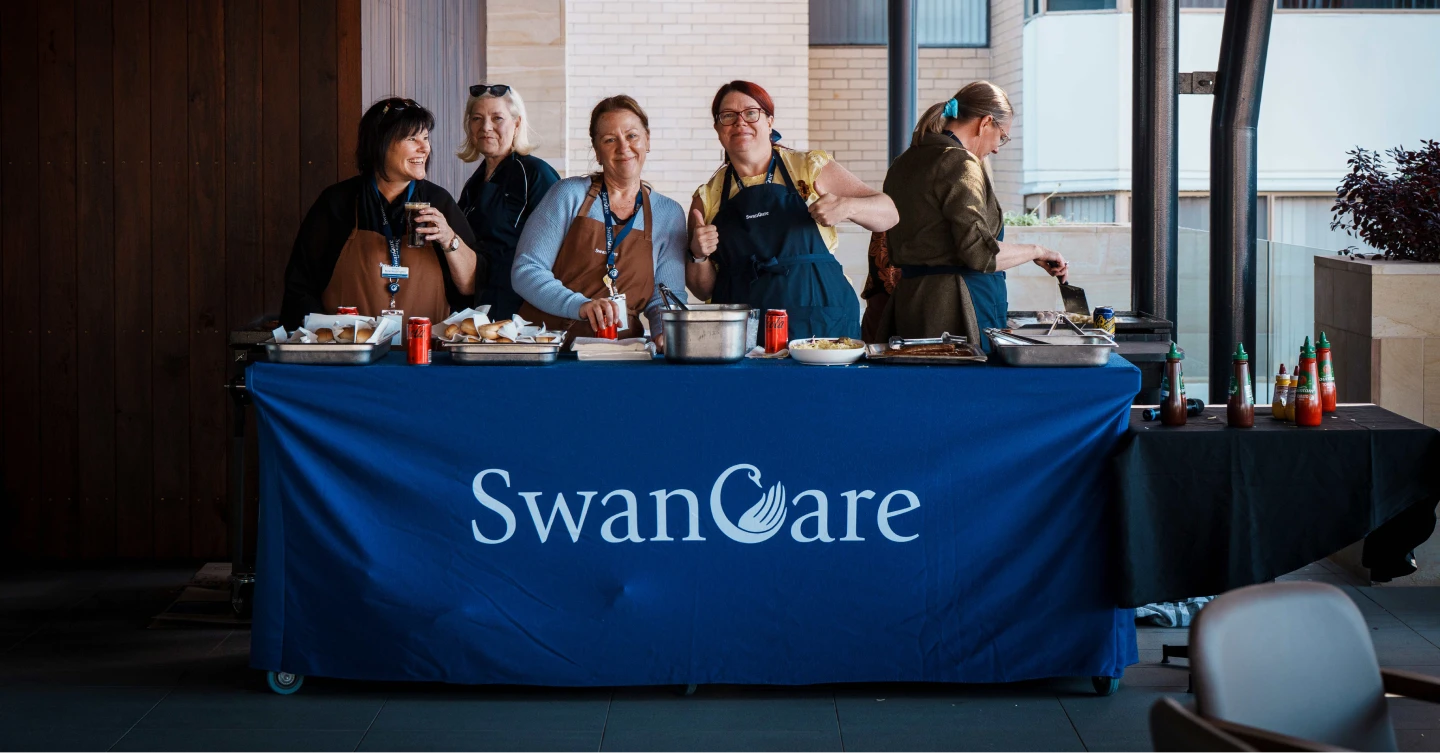
Based on an industry average hourly cost, the time saved represents approximately $16,000 in staff time. "In a sector under considerable financial pressure, that isn't insignificant," Jae notes. "But if you ask me whether the business case was about the $16,000 or the 500 hours, I'd say the 500 hours matters more. It matters more to the individuals in their homes and to the individual people in our teams."
What completion data never showed
Traditionally, SwanCare reported that 85%, 95% or 100% of staff had completed a module. Those numbers showed who had finished the training, not what they understood.
Falls prevention made the difference clear. When SwanCare enabled Knowledge Verification on its falls prevention education, staff weren't demonstrating the level of knowledge the team expected.
"The completion data would never have shown us that," says Erin. "We would have seen 100% of people completing that module and that was compliance completed. On paper, those staff could have been completely compliant, but the numbers in Knowledge Verification didn't lie."
Instead of assigning more training to everyone, the team used the data to roll out targeted toolbox sessions on falls prevention, putting effort where it was needed most.
It is still early, but Erin is already seeing the effect on the floor. Conversation, focus and awareness around falls have increased, and contributing factors are being identified more often and actioned more consistently across the service.
Completion data
Tells us whether someone did something. Falls prevention: 100% complete.
Comprehension data
Tells us whether the learning is having an impact. Falls prevention: a gap, now targeted.
"Completion data tells us whether someone did something. Comprehension data tells us whether or not the learning is actually having an impact."
Erin Mielens, Learning & Development Manager
An environment of respect
Many of SwanCare's staff bring extensive experience, both across the sector and within SwanCare itself. Some have completed the same topics many times over their careers.
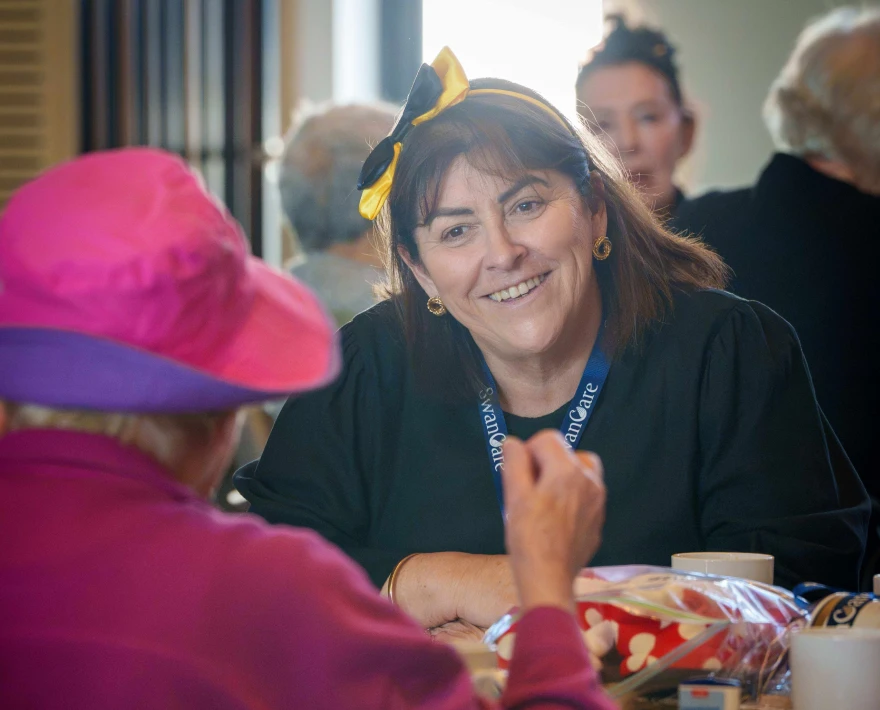
"Being asked to sit through the same information again and again is understandably frustrating, especially when they already know it," says Erin. "Knowledge Verification really changed that conversation. We're effectively saying, show us what you know, and if you can demonstrate that required knowledge, we're recognising that. If there's gaps, we'll give you the learning that you need."
For Jae, that respect is as important as the time saved. "I think that's a really important message to send to a workforce," she says. "That we're listening to them, that we're respecting their experience, and we're concentrating their valuable learning time on the areas where it can actually build their capability."
Looking ahead: a more mature conversation about learning
The next stage for SwanCare isn't about eliminating training. It's about being more sophisticated about where it adds value.
"Where training adds value, where knowledge can be verified, where competency needs to be demonstrated, and where our data is telling us there are genuine knowledge gaps," says Jae. "That's a much more mature conversation than simply asking, what's our mandatory training completion rate?"
For SwanCare, the opportunity now is to build on these early results, using the insights from Knowledge Verification to inform a more targeted approach to workforce learning and capability development. It's about ensuring learning remains purposeful, evidence based and responsive to the needs of both staff and the people they support.
Erin sees opportunities to translate that approach into practice.
"Where we can save that time using Knowledge Verification, we actually open the door to expand more topics, raise greater questions and identify new skill gaps," she says. "We spend less time on the rote learning that sometimes comes with mandatory training and we can use that time and energy to grow, develop and inspire our people to be part of a learning organisation."
Advice for other aged care providers
- Start small: "Choose topics with clear knowledge outcomes, where staff receive regular education and where you're confident that you can act on the results," says Erin.
- Set pass marks by risk, not convenience: SwanCare matched the level of knowledge required to the importance and risk of each topic.
- Keep it optional: Giving staff the choice made Knowledge Verification an opportunity, not another hurdle.
- Use the data, not just the result: Where comprehension is lower than expected, target the learning to that gap rather than reassigning training to everyone.
- Keep other forms of assurance where they belong: Practical competency and workplace observation still sit alongside Knowledge Verification.
"Our people bring an enormous amount of knowledge and experience to their roles. When we recognise that knowledge, we're not just making learning more meaningful- we're giving them something incredibly valuable back: their time. And in aged care, that time matters."
Jae Smith, Chief Governance & Strategy Officer
Key takeaways
- 499.8 hours given back to care in 90 days, with Knowledge Verification enabled on 28 of 50 modules and staff choosing whether to use it.
- A pass rate of around 50% shows the process is recognising existing knowledge and identifying genuine gaps, not letting staff bypass learning.
- Approximately $16,000 in staff time saved, based on an industry average hourly cost.
- Comprehension data revealed a gap in falls prevention that 100% completion rates would have hidden, leading to targeted toolbox sessions.
- An environment of respect for experienced staff, with learning time focused where it builds capability.
- A stronger assurance story for the Board and assessors, built on what staff know rather than what they clicked through.


