


Ausmed is a Trusted Information Partner of Healthdirect Australia. Verify here.


© 2026 Ausmed Pty Ltd (ABN: 33 107 354 441)
For hospital educators preparing new graduates, international nurses and new managers for hard conversations with patients, families and staff. A clinician talks the scenario through with an AI persona, by voice or text, and gets structured feedback as soon as it ends. There is no simulation lab to book.
Book a walkthroughMost communication training is a module about communication. Staff read about de-escalation or responding to a complaint and answer some questions. Then they meet the real thing for the first time, with a distressed person in front of them.
A simulation lab reaches a handful of people at a time. AI Simulations reach a whole cohort, on their own time.
An AI Simulation puts the clinician in the conversation. A realistic AI patient or family member responds to what the clinician actually says. Staff can practise on a phone between shifts.
Simulations sit inside some Ausmed modules. Since September 2026, they also run as standalone activities in the Ausmed app.
Simulations cover the conversations that go wrong under pressure, for the staff who meet them first.

A family member wants answers about their relative's care, and the clinician has to listen and respond on the spot.

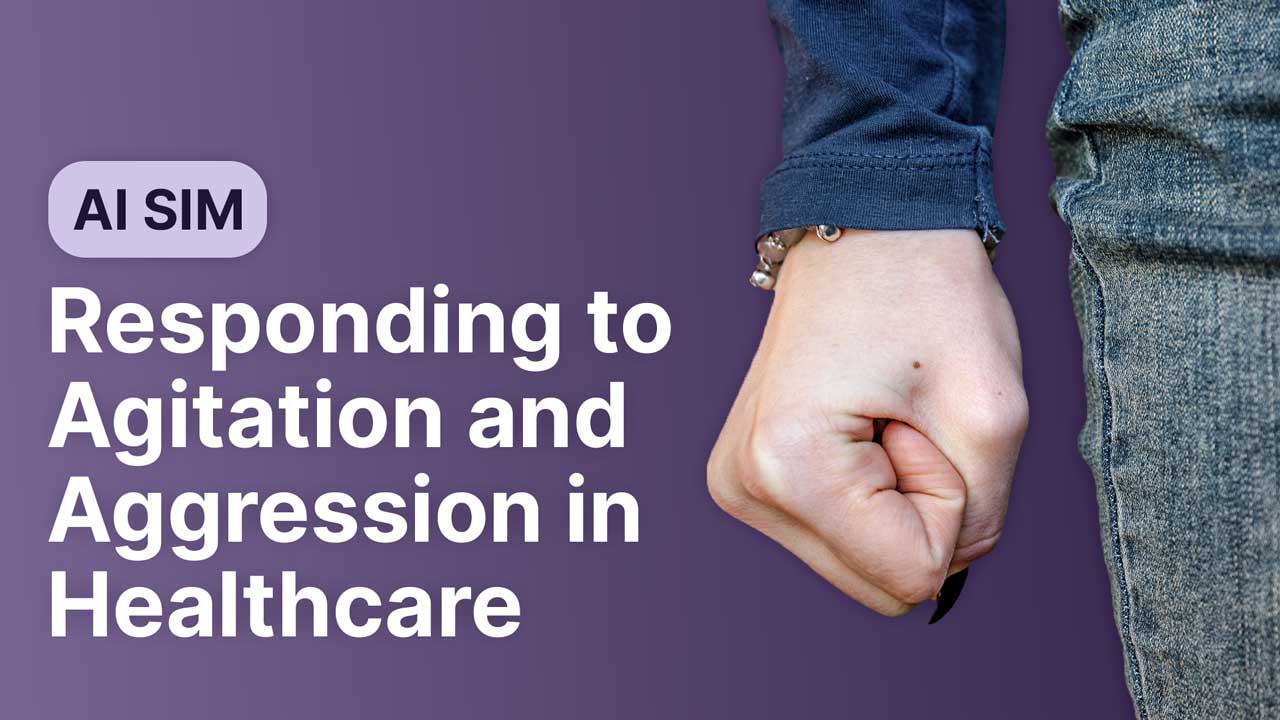
Practise calming a distressed patient or visitor, and raising a concern with the right person.

Rehearse the feedback a colleague needs to hear before having the conversation for real.

Meet the hard conversations in practice before they meet them on a first rotation.

Build confidence in conversations with patients and families on an Australian ward.

Practise the conversations that come with running a shift or leading a team.
A few of the simulations hospital staff can run today.
The learner sees their role, the situation and what they're practising, inside an Ausmed module or as a standalone activity in the Ausmed app.
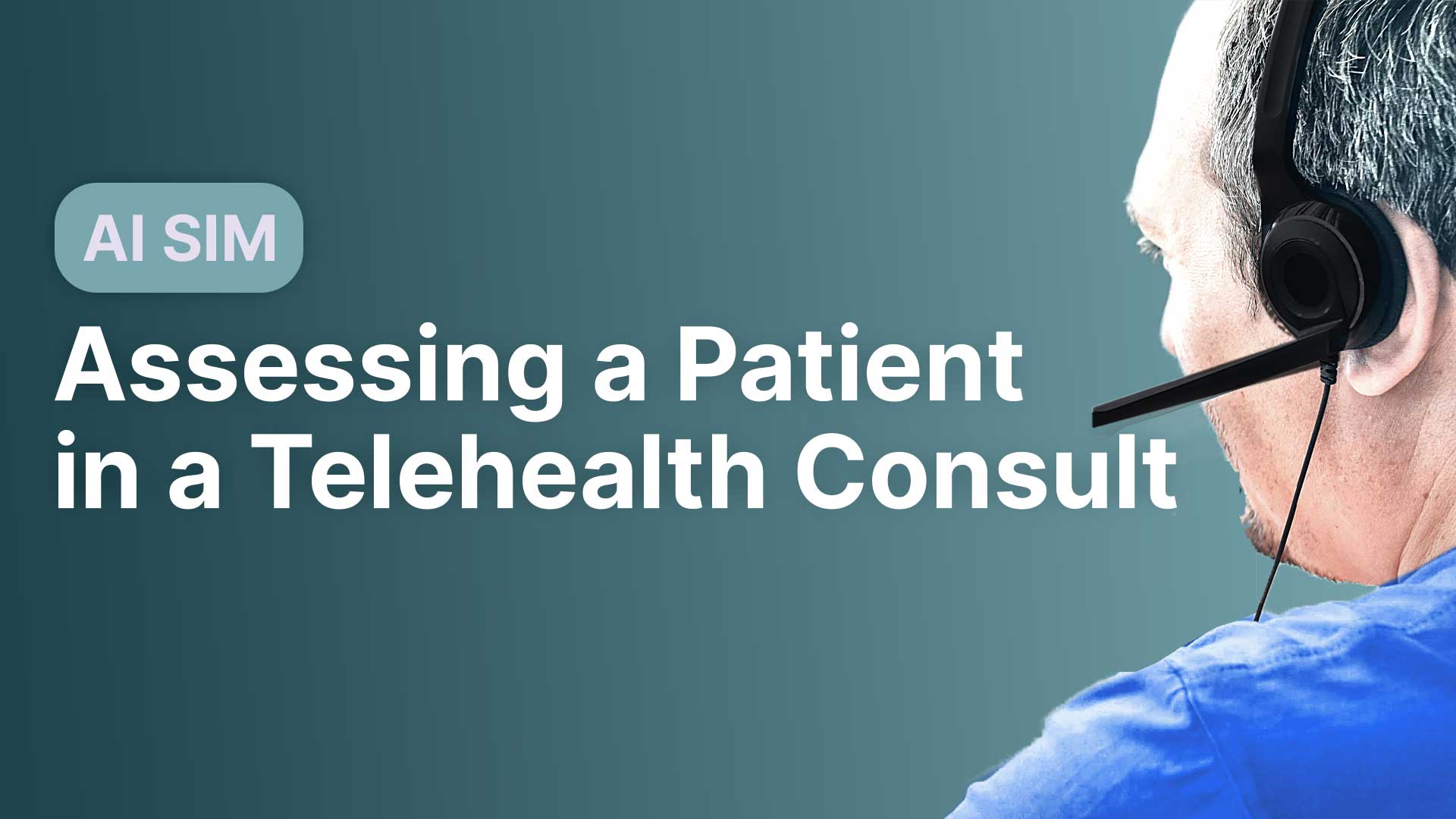
They speak with a realistic AI patient or family member, who responds to what they actually say. Where they can't talk aloud, they type.
When they end the role-play, they get structured feedback on their strengths and areas to improve, against a rubric written by Ausmed's clinical team.
Saying the words is harder than choosing them from a list. In voice mode the learner speaks to the persona and hears it reply, which is closer to the bedside than any multiple-choice question.
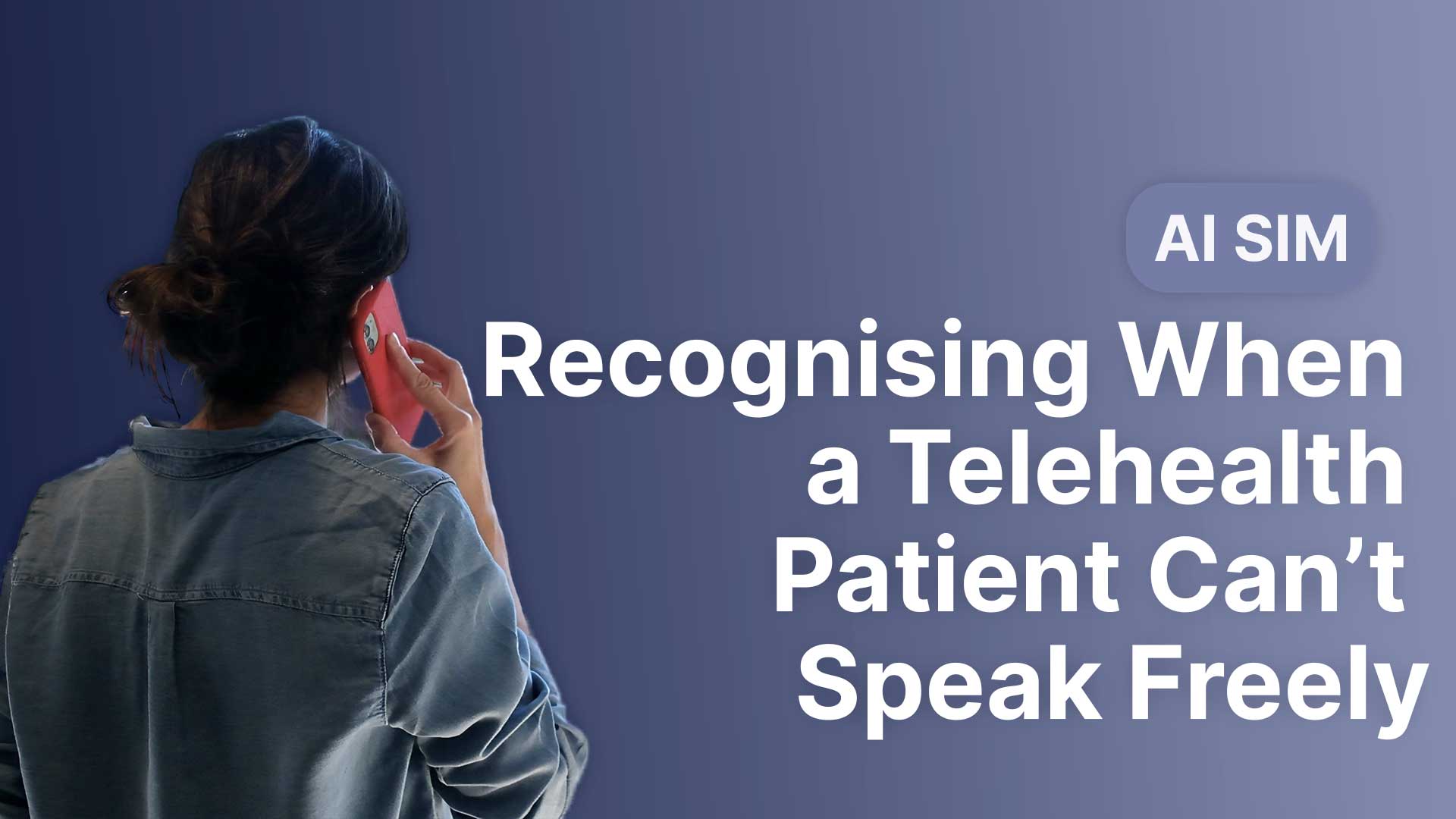
Text mode covers the times they can't speak aloud, on a shared computer or a busy ward. Both modes finish with the same feedback.
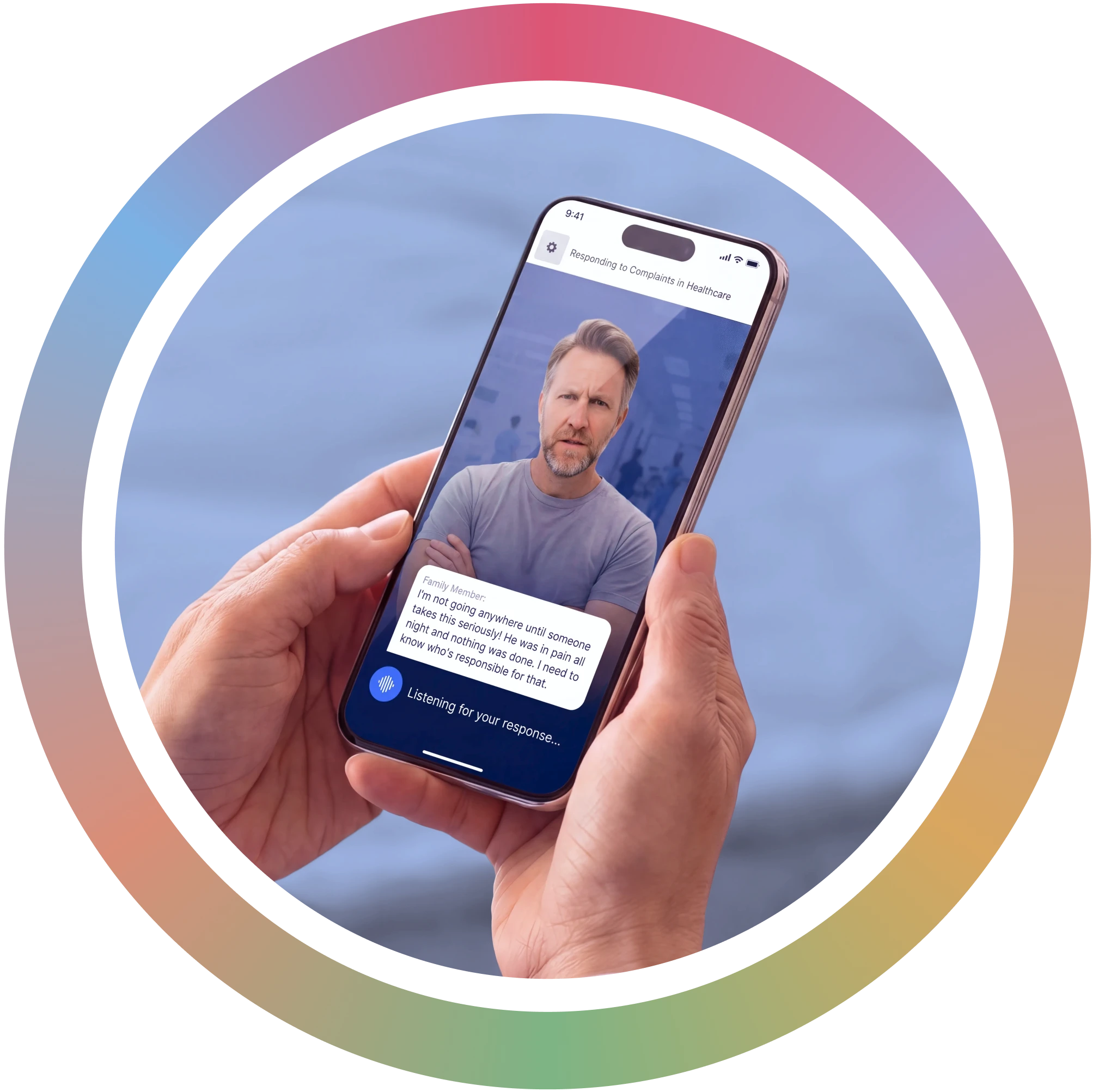
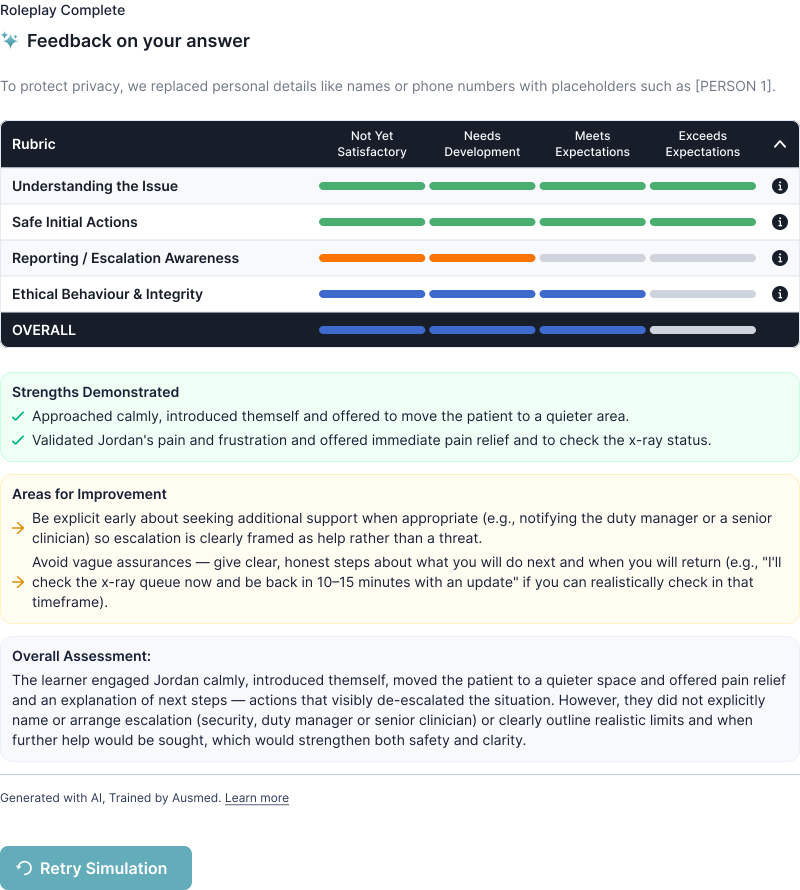
When the learner ends the role-play, they get structured feedback on their strengths and areas to improve. It's measured against a rubric written by Ausmed's clinical team, so every learner is judged on the same criteria.
That feedback is for the learner. Managers and educators can't yet see individual attempts.
Where you need a signed record that someone can handle the situation, pair the simulation with an observed assessment in Ausmed Competency™. A named assessor records the result as Competent or Not Yet Competent.
Digitising paper-based competencies
prefer AI simulations to other forms of e-learning

rate their simulation excellent or good
In-product survey of 1,000+ learners, July to October 2026.
A simulation gives a clinician practice at the conversation itself, with AI feedback at the end. It leaves no record of competence, so clinical skills still need a named assessor's sign-off.
| Module | AI Simulation | Competency assessment | |
|---|---|---|---|
| What the learner does | Reads, watches and answers questions | Talks a scenario through with an AI persona | Performs the skill in front of an assessor |
| Who gives feedback | The module's own questions | The AI, against a clinical rubric | A named assessor |
| Who sees the result | The learner, and the hospital through its reports | The learner | The learner, and the hospital through competency dashboards |
| What it shows | Training completed | Practice, with no record of competence | Competent or Not Yet Competent, signed and dated |
| Best suited to | Knowledge and mandatory content | Communication and judgement in a conversation | Clinical skills and procedures |
For example, graduate and transition programs, where new clinicians need practice before they meet the real conversation.
Learning Management
When you need an assessor to observe the skill and sign the record.
Digitising Paper-based Competencies
The Ausmed modules some simulations sit inside, with the NSQHS mandatory training and CPD content.
Training LibrarySee a simulation running, in voice and in text, with the feedback the learner gets at the end, and we'll take you through the scenarios available now.
Not yet. Feedback currently goes to the individual learner, and there is no manager or educator view of simulation attempts. Treat simulations as practice, and use competency assessment where you need evidence.
Simulations written for hospital staff are available now, covering complaints and family concerns, escalation and de-escalation, and giving feedback. We add more every month, so ask us for the current list when you plan a program around them.
Not yet. Ausmed writes the simulations, and they're general in nature. They won't follow your local escalation pathway or procedure word for word.
You can request a scenario the same way you request new content, and we'll tell you whether it fits the library.
Simulations use a third-party AI model to play the persona and write the feedback. That processing happens with the model provider, outside your own systems.
Before a pilot, we'll take your IT and privacy teams through the provider and how learner data is handled.
For voice mode, yes, which usually means a phone or headset. Text mode works without one, so staff on a shared ward computer can still complete a simulation by typing.
Ausmed is a Trusted Information Partner of Healthdirect Australia. Verify here.