

Ausmed is a Trusted Information Partner of Healthdirect Australia. Verify here.


© 2026 Ausmed Pty Ltd (ABN: 33 107 354 441)
For directors of clinical governance, quality and safety managers and directors of nursing. Ausmed holds each clinician's training, competency sign-offs, policy acknowledgements and performance reviews on one record. You answer the workforce actions from it, and the committee and the assessor read the same figures.
Book a walkthrough
Compliance reports by NSQHS Standard answer the workforce actions under Clinical performance and effectiveness at short notice.

The Audit Report shows what the clinicians involved had completed and been assessed on when it happened.

You choose which assessors can sign off each competency, and the record names the one who did.

When a scope expands, you assign the new assessment to the role, and the dashboard shows who is signed off.

Training and competency history stays with each person after they leave, ready for coroners, claims and legal teams.

Ausmed Library™ resources carry review dates under the T.R.U.S.T.E.D. framework. Swap an outdated in-house module for a current one.
NSQHS Standards, second editionAssessing competency and training needs is the first of the action's four parts, and monitoring participation is the last. Ausmed produces both from the same record.
The health service organisation uses its training systems to:
a. Assess the competency and training needs of its workforce
b. Implement a mandatory training program to meet its requirements arising from these standards
c. Provide access to training to meet its safety and quality training needs
d. Monitor the workforce’s participation in training
Assessors sign off competency in Ausmed Competency™ against your own tools, with Competent and Not Yet Competent results by role. Knowledge Verification results show which clinicians already know an eligible topic.
Participation goes to the clinical governance committee in the Board Report: compliance percentage, overdue items by Standard or risk area, and the quarter-on-quarter trend. It exports as PDF or CSV.
Compliance reporting by NSQHS StandardIn Ausmed Competency™, the assessor records the sign-off on the unit in the assessor app. The record holds their name, a date and time stamp and their comments, with an optional co-signer.
You choose which assessors can assess which competencies. The name on the record belongs to someone you approved for that skill.
Results are Competent or Not Yet Competent, and dashboards show both by team, role and location. The assessments are your hospital's own, and you build them in Ausmed from your existing procedures and forms.
How Ausmed Competency works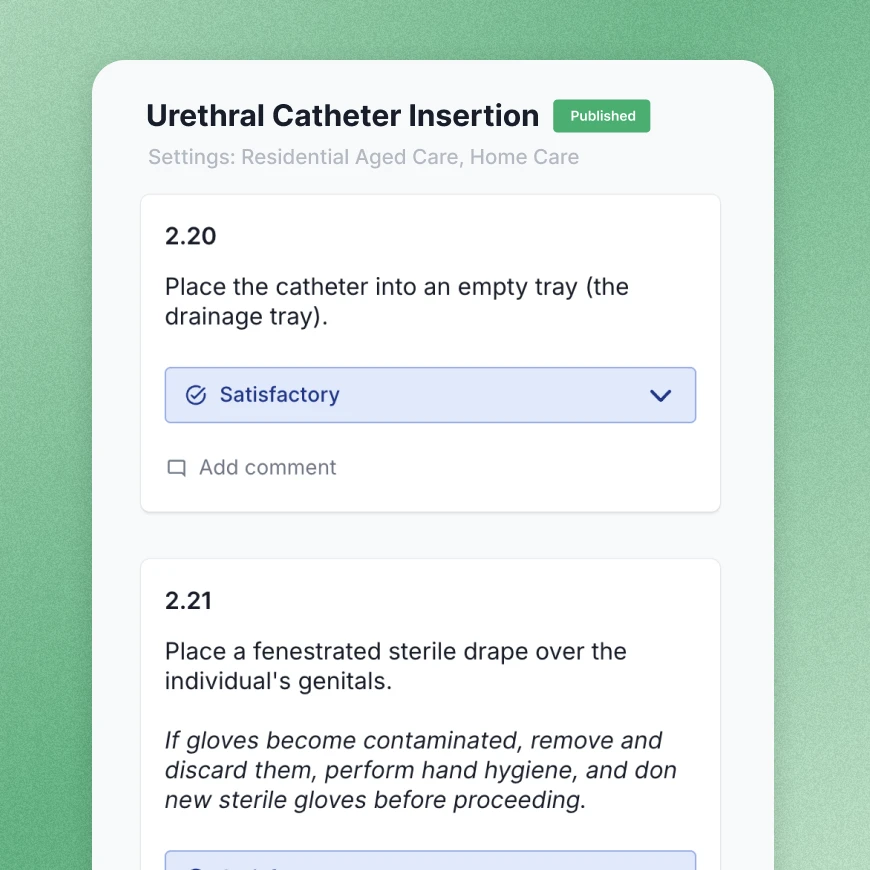
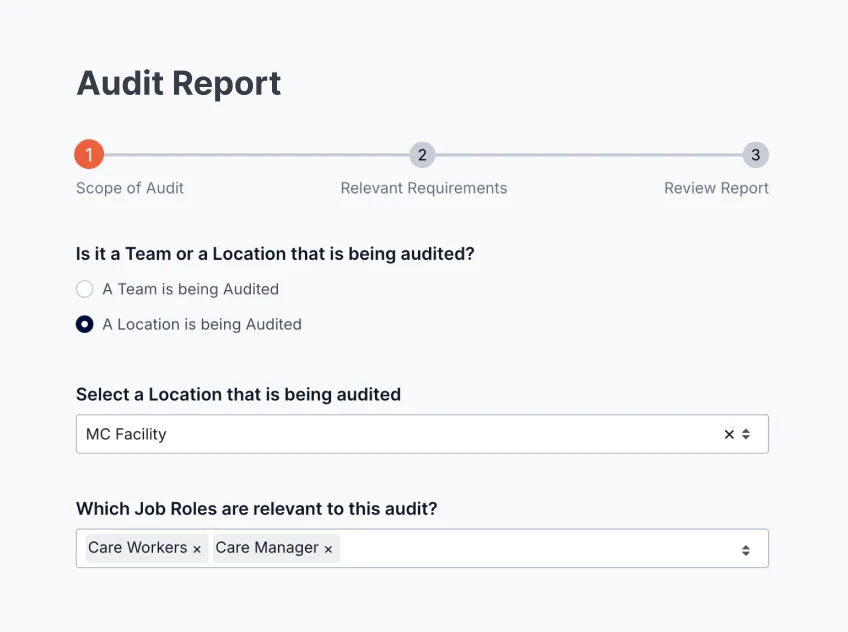
The Audit Report in Ausmed Analytics™ shows status per person and per requirement, with timestamps, version history and links to the evidence. When an incident review or a legal request names a clinician and a date, the answer comes from the record.
The record only reaches back as far as it starts, so the sooner the history sits in one place, the further back you can answer.
Where an incident involves a staff member's practice, their manager records it in a private Ausmed Perform™ note, with the date it happened and evidence attached. Only managers see Perform notes, and each one sits on the same staff record as the person's training and competency history, ready for the next review.
Ausmed Policy™ sends the revised policy or procedure to the people it applies to and records each acknowledgement against the version they read. Reminders follow up anyone who hasn't acknowledged it, and the committee sees acknowledgement of the new version by team and role.
Discover Ausmed Perform™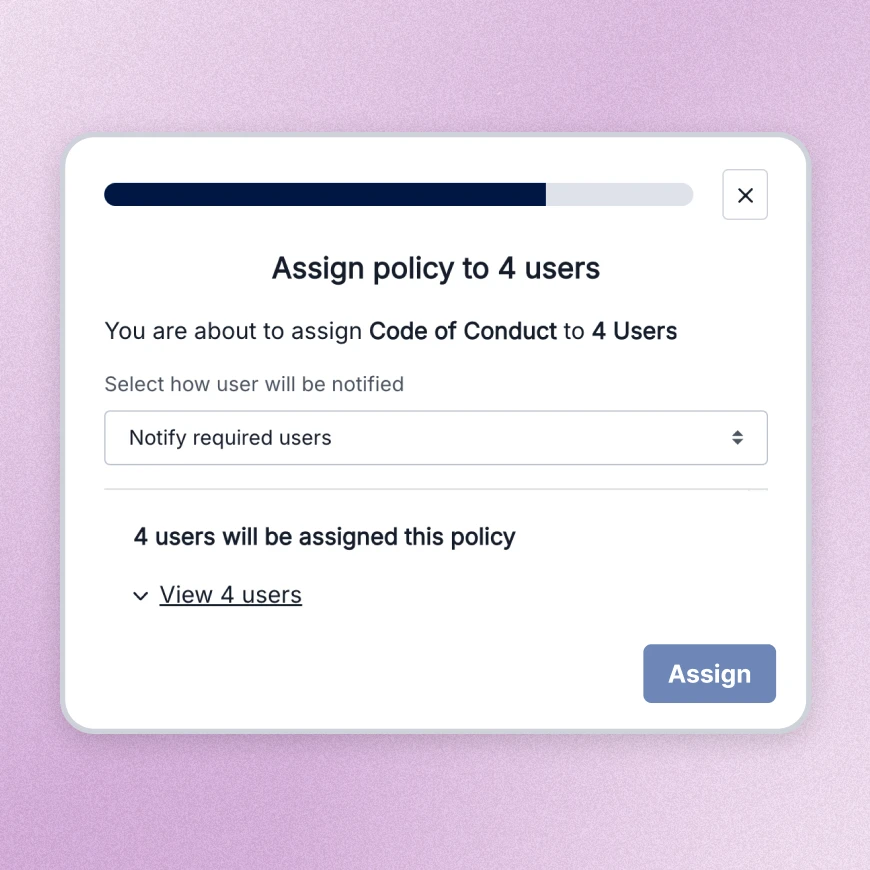
For Actions 1.19 to 1.24, Ausmed holds evidence for the training and performance actions, and the competency history behind scope decisions. Credentials holds registrations and clearances for Action 1.24. Scope of practice and credentialing decisions stay with your committees. The same criterion, Clinical performance and effectiveness, also covers roles, supervision, evidence-based care and clinical variation (Actions 1.25 to 1.28).
The health service organisation provides orientation to the organisation that describes roles and responsibilities for safety and quality for:
a. Members of the governing body
b. Clinicians, and any other employed, contracted, locum, agency, student or volunteer members of the organisation
Assign induction by role from your HR data when someone starts, give casual and agency staff separate onboarding plans, and assign policy acknowledgements at onboarding.
The health service organisation uses its training systems to:
a. Assess the competency and training needs of its workforce
b. Implement a mandatory training program to meet its requirements arising from these standards
c. Provide access to training to meet its safety and quality training needs
d. Monitor the workforce’s participation in training
Training plans by role with recurring assignment, competency sign-offs by approved assessors, and participation reports by NSQHS Standard, team, role and location.
The health service organisation has strategies to improve the cultural safety and cultural competency of the workforce to meet the needs of its Aboriginal and Torres Strait Islander patients
Assign your cultural safety program by role, deliver it online or as in-person Events, and see it in the same reports as every other requirement.
The health service organisation has valid and reliable performance review processes that:
a. Require members of the workforce to regularly take part in a review of their performance
b. Identify needs for training and development in safety and quality
c. Incorporate information on training requirements into the organisation’s training system
Appraisals, probation reviews and catch-ups in Ausmed Perform™, with notes and evidence, held beside the training record.
The health service organisation has processes to:
a. Define the scope of clinical practice for clinicians, considering the clinical service capacity of the organisation and clinical services plan
b. Monitor clinicians’ practices to ensure that they are operating within their designated scope of clinical practice
c. Review the scope of clinical practice of clinicians periodically and whenever a new clinical service, procedure or technology is introduced or substantially altered
Competency results by procedure and assessor show what assessors have signed a clinician off to do. Defining and approving scope stays with your committee.
The health service organisation:
a. Conducts processes to ensure that clinicians are credentialed, where relevant
b. Monitors and improves the effectiveness of the credentialing process
Ausmed does not credential clinicians. Credentials holds the registrations and clearances a credentialing committee checks, tracked to expiry, beside the training and competency history.

Map mandatory training to the NSQHS Standards and report it by Standard, with CPD alongside.
Training Library
Have workforce evidence ready for an assessment that comes with a day's notice.
NSQHS Re-accreditation
Run graduate, transition and education programs, and record assessments as they happen.
Learning ManagementManager of Organisational Development, private hospital group
Bring a recent incident review, and we'll show you which parts of the workforce question Ausmed would have answered from the record.
No. Your hospital's assessments are your own and stay that way. You build them in Ausmed Competency™ from your own procedures and forms, with your criteria and your choice of assessors.
Only if you allow it. You assign assessors per competency, so only the people you have approved for a skill can sign it off.
Not yet. Credentialing and defining scope of practice stay with your credentialing committee. Ausmed holds the training and competency history that committee may want to see.
The second edition, which accrediting agencies assess hospitals against today. The Commission has consulted on a draft third edition, and assessment against it is not expected to start until 2030.
Ausmed is a Trusted Information Partner of Healthdirect Australia. Verify here.