Acute coronary syndromes (ACS) remain a major health challenge in Australia. In 2023 alone, approximately 57,100 acute coronary events occurred among adults aged 25 and over. This equates to roughly 156 events every day (AIHW 2026). Understanding ACS presentation and management is essential for all healthcare professionals.
What are Acute Coronary Syndromes?
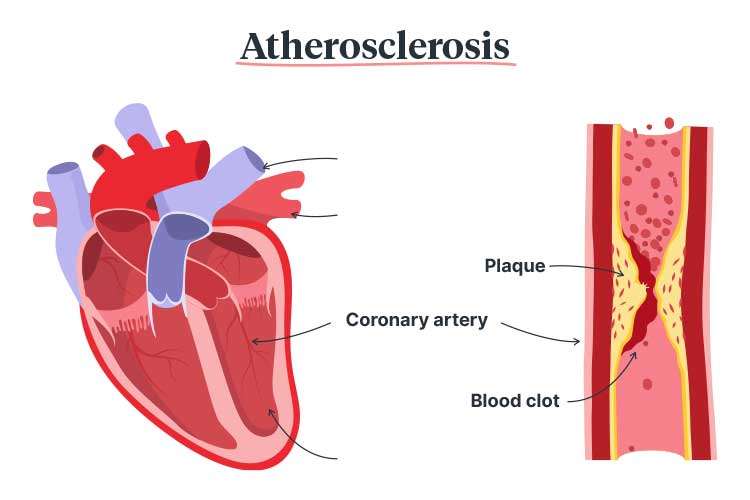
Acute coronary syndrome (ACS) is an umbrella term used to describe any situation in which the blood supply to the heart is wholly or partially obstructed (Brieger et al. 2025).
In most cases, the blockage is caused by a thrombosis that decreases the blood supply to part of the heart muscle. Research has shown that blood supply can also be affected by coronary artery spasm or spontaneous dissection of the artery (Brieger et al. 2025).
A leading cause of an ACS is atherosclerosis (also known as coronary heart disease), a condition where plaque (made up of cholesterol and fatty materials) builds up and thickens the artery walls (AIHW 2026). If this plaque ruptures, it can cause a complete obstruction of the vessel, leading to myocardial infarction (Brieger et al. 2025).
Not all types of ACS are caused by atherosclerosis. These are classified as Myocardial Infarction due to Non-Atherosclerotic causes (Brieger et al. 2025). Causes can include spasming and narrowing of arteries, as well as spontaneous coronary artery dissection (SCAD) (Brieger et al. 2025).
If not treated properly, an ACS can be life-threatening (Brieger et al. 2025).
Types of Acute Coronary Syndromes
Acute coronary syndromes include:
- Unstable angina
- Acute myocardial infarction
- Myocardial Infarction with Acute Coronary Occlusion (e.g., ST-Segment Elevation Myocardial Infarction (STEMI), coronary embolism or vasospasm)
- Myocardial Infarction due to oxygen/supply mismatch without Acute Coronary Occlusion (e.g., Non-ST Elevation Myocardial Infarction (NSTEMI))
(Brieger et al. 2025)
Unstable angina describes chest pain caused by an obstructed blood supply to the heart. It can be brought on by activity, such as walking uphill, or when the person is at rest. This may progress into an acute myocardial infarction, which occurs when the blockage injures or causes the death of the heart muscle (Brieger et al. 2025).
Issues Surrounding Acute Coronary Syndromes in Australia
Certain patients are less likely to receive appropriate interventions (especially invasive management) for ACS, even when recommended. These include:
- Women, whose research has found experience delays in diagnosis of acute coronary syndromes and treatment despite guidelines around management (Stehli et al. 2022).
- First Nations people, due to factors such as:
- Inequity of healthcare access
- Lack of coordinated care
- Lack of access to culturally appropriate interpreter services
- Lack of cultural safety
- People who live in remote areas for logistical reasons.
(AIHW 2026; Brieger et al. 2025)
The latest ACS guidelines stress the importance of recognising that First Nations people are likely to experience ACS at a younger age with poorer outcomes compared to non-Indigenous Australians. These disparities highlight the need for cultural awareness and safety in care. This includes providing access to First Nations health practitioners, liaison officers and culturally appropriate interpreter services (Brieger et al. 2025).
Risk Factors for Acute Coronary Syndromes
- Diabetes mellitus
- Hypertension
- High blood cholesterol
- Family history of atherosclerosis
- Male sex
- Obesity
- Previous myocardial infarction
- Inactivity
- Smoking, including tobacco and vaping
- A family history of chest pain, heart disease or stroke
- Socioeconomic disadvantage
(Brieger et al. 2025; Heart Foundation 2025; Nickson 2021)
Symptoms of Acute Coronary Syndromes

The most common symptom is chest pain or discomfort, which may feel like pressure, tightness, burning or aching (ANZCOR 2026). Other possible symptoms include:
- Pain or discomfort in the arms, jaw, neck, back or stomach
- Nausea or vomiting
- Indigestion
- Shortness of breath at rest
- Cold sweat
- Dizziness, lightheadedness or syncope
- Unexplained or abnormal fatigue
- Restlessness
(ANZCOR 2026)
Note that the symptoms of an ACS often have an acute onset (ANZCOR 2026).
Differential Diagnoses of Acute Coronary Syndromes
Non-ACS conditions that may cause acute chest pain include:
- Aortic dissection
- Pulmonary embolism
- Pericarditis and myocarditis
- Gastrointestinal conditions
- Musculoskeletal conditions
- Pulmonary diseases
- Sickle cell crisis
(Brieger et al. 2025)
Even if a 12-lead ECG does not indicate STEMI, other life-threatening conditions such as aortic dissection, pulmonary embolism and tension pneumothorax should be considered (Brieger et al. 2025).
Acute Coronary Syndromes Clinical Care Standard
In 2019, the Australian Commission on Safety and Quality in Health Care released the Acute Coronary Syndromes Clinical Care Standard. This standard aims to ensure all patients presenting with an ACS receive consistent and appropriate treatment (ACSQHC 2019).
The standard contains six quality statements that aim to guide the care of patients experiencing an ACS:
1. Immediate Management
Read: Chest Pain Assessment: What to Do When Your Patient Has Chest Pain
Patients who present with acute chest pain or other symptoms indicative of ACS are assessed using a documented chest pain assessment pathway. Patients should be appropriately informed and provide informed consent for treatment (ACSQHC 2019).
2. Early Assessment
Patients who present with acute chest pain or other symptoms indicative of an ACS should undergo a 12-lead ECG and have the results interpreted within 10 minutes of first emergency clinical contact. The ECG must be performed by an appropriately experienced clinician.
This is to ensure that ACSs are identified as soon as possible and treatment can be commenced (ACSQHC 2019).
3. Timely Reperfusion
Patients experiencing a STEMI should undergo percutaneous coronary intervention (PCI) or fibrinolysis if emergency reperfusion is deemed clinically appropriate (Brieger et al. 2025).
Based on the current Heart Foundation guidelines:
- Patients should receive percutaneous coronary intervention (PCI) if it can be performed within 60 minutes of initial medical contact (under 60 minutes 'door-to-balloon' time), or
- Patients should receive fibrinolytic therapy if PCI cannot be performed within 90 minutes of initial medical contact.
(Brieger et al. 2025)
4. Risk Stratification
Patients experiencing an Non-ST-Elevation Acute Coronary Syndrome (NSTEACS) should be managed depending on their anticipated risk of severe cardiac complications in the future.
In some situations, the clinician may deem coronary angiography an appropriate diagnostic tool, based on the patient's clinical presentation. In other situations, further non-invasive testing through ECG and troponin analysis may take place (Brieger et al. 2025).
Any treatments should be planned through a shared decision-making process, taking patients' preferences into account (ACSQHC 2019).
5. Coronary Angiography
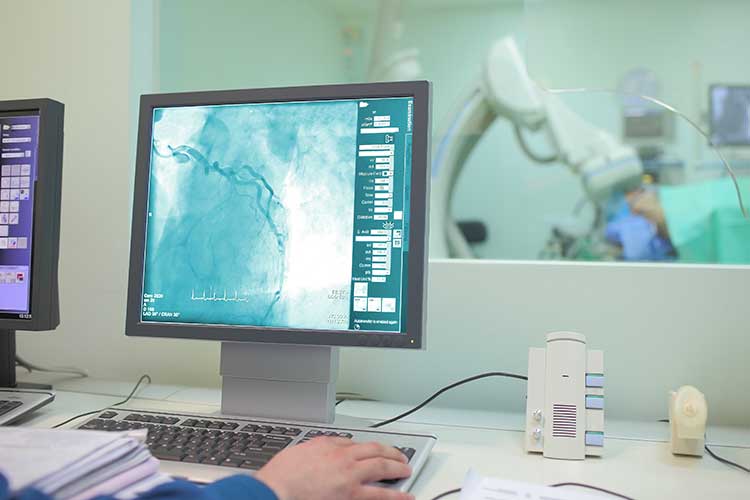
Coronary angiography is a procedure in which dye is released into the patient's arteries. Through an X-ray, this dye is able to indicate the location and extent of arterial blockages. During this procedure, stents can be deployed into the vessel. In some serious situations, where the patient has multiple blockages, they may be referred for Coronary Artery Bypass Surgery.
It is recommended that patients experiencing an NSTEACS consider undergoing coronary angiography if the anticipated risk of severe cardiac complications in the future is medium or high (Brieger et al. 2025; ACSQHC 2019).
6. Individualised Care Plan
Prior to discharge, patients who have experienced an ACS should work with clinicians to develop an individualised care plan containing:
- Lifestyle changes to manage risk factors
- Medicines to manage risk factors
- The patient's psychosocial needs
- Referral to a cardiac rehabilitation clinic or prevention service
Within 48 hours of discharge, a copy of this plan should be forwarded to the patient and their general practitioner or ongoing clinical provider (ACSQHC 2019).
Secondary prevention strategies such as lifestyle changes, medicines and cardiac rehabilitation are essential in reducing the risk of future adverse events (Brieger et al. 2025).
Conclusion
Acute coronary syndromes remain a major health challenge in Australia, requiring prompt recognition and evidence-based management guided by current clinical care standards. Addressing health disparities and ensuring culturally safe, equitable care for all populations is essential to improving outcomes. By implementing these principles, healthcare professionals can reduce barriers to diagnosis and treatment, ultimately improving survival for people experiencing an acute coronary syndrome.
Test Your Knowledge
Question 1 of 3
How many minutes after first emergency contact should an ECG be performed?
Topics
References
References
- ACSQHC (Australian Commission on Safety and Quality in Healthcare) 2019, Acute Coronary Syndromes Clinical Care Standard, Australian Government, viewed 17 August 2026, https://www.safetyandquality.gov.au/publications-and-resources/resource-library/acute-coronary-syndromes-clinical-care-standard-2019
- AIHW (Australian Institute of Health and Welfare) 2026, Heart, Stroke and Vascular Disease: Australian Facts, Australian Government, viewed 18 August 2026, https://www.aihw.gov.au/reports/heart-stroke-vascular-diseases/hsvd-facts/contents/all-heart-stroke-and-vascular-disease/coronary-heart-disease
- ANZCOR 2026, 'Guideline 14.1 – Acute Coronary Syndromes: Presentation', Australian and New Zealand Committee on Resuscitation, viewed 17 August 2026, https://www.anzcor.org/home/acute-coronary-syndromes/guideline-14-1-acute-coronary-syndromes-presentation
- Brieger D, Cullen L & Briffa T 2025, 'Comprehensive Australian Clinical Guideline for Diagnosing and Managing Acute Coronary Syndromes', Heart, Lung and Circulation, vol. 34, pp. 309–397, viewed 17 August 2026, https://doi.org/10.1016/j.hlc.2025.02.102
- Heart Foundation 2025, What is a Heart Attack?, Heart Foundation, viewed 17 August 2026, https://www.heartfoundation.org.au/conditions/heart-attack
- Nickson C 2021, 'Acute Coronary Syndromes', Life in the Fast Lane, viewed 17 August 2026, https://litfl.com/acute-coronary-syndromes/
- Stehli J, Dinh D, Dagan M et al. 2022, 'Sex Differences in Treatment and Outcomes of Patients with In-Hospital ST-Elevation Myocardial Infarction', Clinical Cardiology, vol. 45, no. 4, pp. 427–434, viewed 17 August 2026, https://doi.org/10.1002/clc.23797