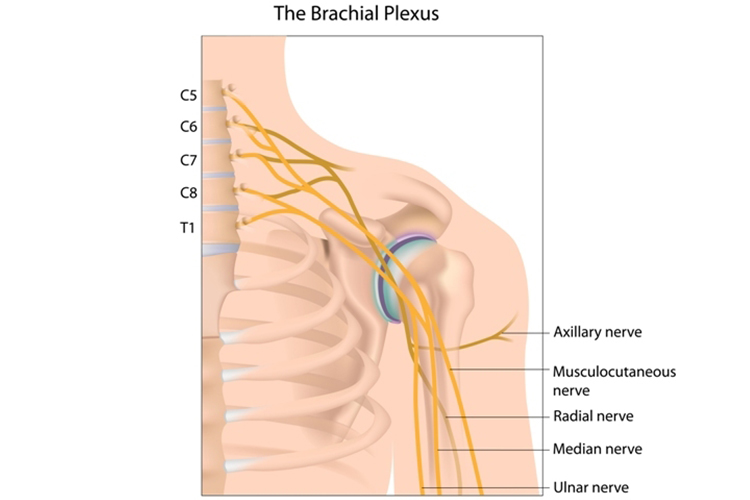
The brachial plexus begins in the spinal cord in the cervical and upper thoracic regions (from C5-T1) and is a system of nerves that relays messages to and from the central nervous system to the shoulder, arm and hand (Dean et al. 2026).
It's a complex network that supplies the nerves to all the muscles in the upper limbs. Motor and sensory contributions vary depending on the root, with C5 and C6 carrying the most motor fibres and C7 carrying the most sensory fibres. If this web of nerves is damaged, it can have potentially severe consequences for the individual (Dean et al. 2026).
Brachial Plexus Injuries
Often, a brachial plexus injury occurs when the nerves are stretched, compressed or torn. Signs and symptoms of brachial plexus injuries are mostly dependent on two factors: the severity of the injury and the location of the injury.
Less severe brachial plexus injuries often result from accidents, such as sporting mishaps (Armstrong et al. 2024).
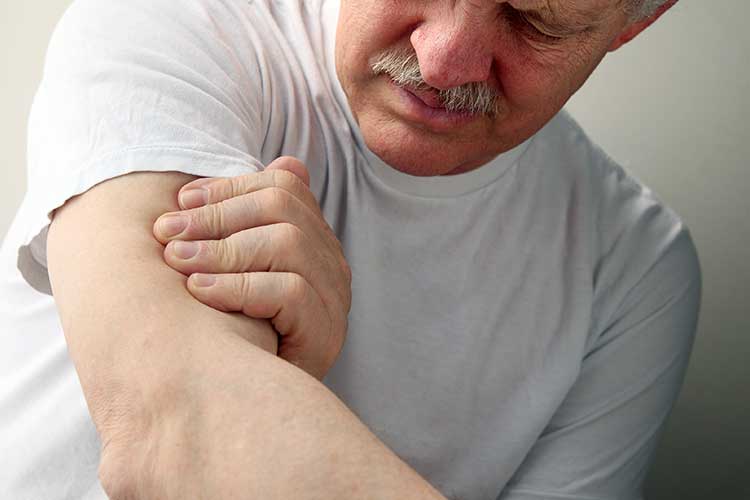
The symptoms experienced from these less severe injuries may last from a few seconds or minutes to a few days. People will often complain of a burning sensation or electric shock feeling down their arm, and may also experience numbness and weakness in the affected arm. This is a neuropraxia injury in which axonal integrity is preserved; therefore, symptoms are transient (Armstrong et al. 2024).
The more severe brachial plexus injuries are generally those resulting from a high-level exertion of force, such as that felt in a motor vehicle accident (Miller et al. 2022).
A total avulsion of the brachial plexus injury occurs when the brachial plexus roots are ripped away from the spinal cord. The individual may be left with a paralysed arm, a significant loss of function and sensation or severe pain (Miller et al. 2022).
Neonatal Brachial Plexus Palsy
Another way in which these injuries may occur is during birth. This is known as neonatal brachial plexus palsy or Erb's palsy (C5 and C6 injury) and is caused by a birth incident where a newborn sustains a brachial plexus injury (Li et al. 2023).
The injury can occur to some or even all of the nerve roots of the brachial plexus, which may become stretched or ruptured during this process. Because the brachial plexus is so intricate, it is difficult to pinpoint the site of damage precisely (Li et al. 2023).
Neonatal brachial plexus palsy symptoms will vary according to the severity and location of the injury, and are almost always one-sided.
- Upper roots (C5-C6): This is the most common injury. The arm hangs against the body, rotated inwards with the elbow straight, and hand and wrist movement are preserved
- Upper roots plus C7: The forearm is also pronated, and the wrist and fingers flexed, which produces the characteristic 'waiters tip' posture
- All roots (C5-T1): Widespread arm paralysis
- Lower roots only (C8-T1): Weakness confined to the hand
(Khabyeh-Hasbani et al. 2024)
Neonatal brachial plexus palsy occurs in approximately 0.04 to 0.5% of births (Khabyeh-Hasbani et al. 2024).
Risk factors include:
- High birth weight
- Fetal malposition
- Shoulder dystocia (obstructed labour where the anterior shoulder of the infant cannot pass)
- Labour induction
- Labour abnormalities
- Operative vaginal delivery
- Multiparity
- Maternal diabetes
- Substantial maternal weight gain
(Khabyeh-Hasbani et al. 2024)
For infants with neonatal brachial plexus palsy, recovery depends on the severity of the injury and the extent of the motor deficit. Early referral to multidisciplinary specialties such as physiotherapy and occupational therapy is essential. Those with a less severe motor deficit will be less likely to have a permanent significant weakness. Infants with minor injuries will frequently have a spontaneous recovery with no interventions required at all. Others may need interventions such as splinting and range-of-motion exercises to prevent contractures. Those with more severe injuries may require surgical intervention (Khabyeh-Hasbani et al. 2024).
Other Causes
Other causes of brachial plexus injuries in adults and children include cancer and radiation treatments, and tumours in or along the brachial plexus. The inflammation and metabolic processes associated with either the cancer or radiotherapy then cause the brachial plexus injury (Lambi et al. 2026).
Treatment of Brachial Plexus Injuries
In both infants and adults, the underlying treatment principles remain the same, with the main goals of treatment being to return to previous levels of function and to prevent further disability (Li et al. 2023).
Rehabilitation is an important component of treatment for someone with a brachial plexus injury, especially if the injury is severe. An important factor not to be overlooked in rehabilitation treatment is the patient's willingness to participate in their treatment program.
To ensure engagement, the person must be well informed about their condition, their chances of regaining strength, and the anticipated level of function following the injury (Miller et al. 2022).
Physiotherapy is essential to help the individual increase their strength and coordination. Occupational therapists also play an important role in assisting the individual with functional training and assessing areas such as range of motion, stamina, power and the need for any adaptive devices (Li et al. 2023).
It is important that rehabilitative treatment is sought immediately following the injury. With any injury involving nerves and muscles, delayed treatment can lead to contractures and further disability for the individual (Li et al. 2023).
Surgical treatments can be used for those with severe brachial plexus injuries. These treatments can help improve upper-limb function and sensation by transferring and repairing nerves. These surgical repair treatments include nerve grafting and nerve transfers, among others (Goubier et al. 2024).
However, like most treatment strategies, these interventions are more viable during a certain timeframe from when the injury occurred, and even with these surgeries, the individual may not regain all the function lost from the injury. However, surgical repair may offer the greatest chance of partial recovery when combined with a multidisciplinary rehabilitation approach (Dean et al. 2026).
Conclusion
Brachial plexus injuries can significantly impact a person's independence and quality of life. When health professionals keep patients well-informed and engaged throughout recovery, they empower better outcomes. A coordinated multidisciplinary approach combining rehabilitation, patient support, and, where appropriate, surgical intervention offers the greatest chance of functional recovery.
Test Your Knowledge
Question 1 of 3
Which of the following is a typical symptom of a less severe brachial plexus injury?
Topics
References
- Armstrong, R, McKeever, T, Leavitt, M, McLelland, C & Hamilton, DF 2024, 'Rehabilitation of brachial plexus injury in contact sport: where are the data that underpin clinical management? A scoping review', PLOS ONE, 19(6), viewed August 2024, https://doi.org/10.1371/journal.pone.0298317
- Dean, T, Levy, ML, Luo, TD & Li, Z 2026, 'Brachial plexus injuries', StatPearls, viewed 12 August 2026, https://www.ncbi.nlm.nih.gov/books/NBK538174/
- Goubier, JN, Battiston, B & Quick, T 2024, 'Adult traumatic brachial plexus injuries: advances and current updates', Journal of Hand Surgery, 49(6), viewed August 2024, https://doi.org/10.1177/17531934241229201
- Khabyeh-Hasbani, N, O'Brien, DM, Meisel, EM & Koehler, SM 2024, 'Current concepts in brachial plexus birth injuries: a comprehensive narrative review', Plastic and Reconstructive Surgery, 12(8), viewed 12 August 2026, https://doi.org/10.1097/GOX.0000000000006083
- Lambi, AG, Holy, T, Tomlinson, RE & Barbe, MF 2026, 'Radiation-induced brachial plexopathy: current understanding, diagnosis and treatment options', Journal of Hand Surgery Global Online, 8(1), viewed 12 August 2026, https://doi.org/10.1016/j.jhsg.2025.100896
- Li, H, Chen, J, Wang, J, Zhang, T & Chen, Z 2023, 'Review of rehabilitation protocols for brachial plexus injury', Frontiers in Neurology: Neuromuscular Disorders and Peripheral Neuropathies, 14, viewed August 2023, https://doi.org/10.3389/fneur.2023.1084223
- Miller, C, Jerosch-Herold, C & Cross, J 2022, 'Brachial plexus injury: living with uncertainty', Disability and Rehabilitation, 45(12), pp. 1955–1961, viewed August 2022, https://doi.org/10.1080/09638288.2022.2080287