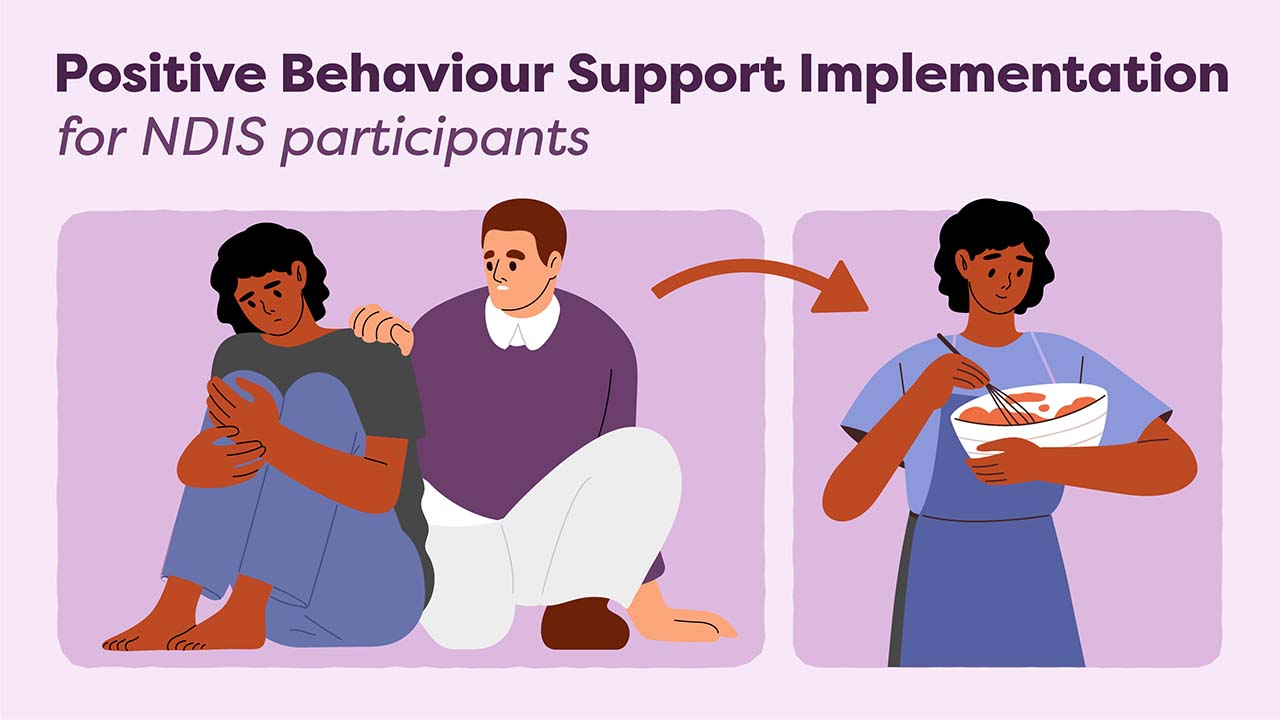
Positive Behaviour Support Implementation for NDIS participants
CPDTime.
20m
Updated 24 Mar 2026 Certificate70 Ratings

Positive Behaviour Support (PBS) is a person-centred, evidence-based approach used to understand and respond to behaviours of concern in people living with disability. These behaviours often communicate unmet needs, distress or required changes within their environment, and can impact a person’s safety, wellbeing and quality of life.

This Training Module provides an overview of how to implement PBS and follow Behaviour Support Plans (BSPs) when working with NDIS participants. It explains how to recognise behaviours of concern, what your role and responsibilities are, and how to respond safely to these behaviours by following participants’ BSPs, documenting observations, and meeting reporting and regulatory requirements.

Content

5 Units • 10 Questions
Pre-reflection
1 Question
Unit 1: Introduction
2m
Unit 2: Importance of Positive Behaviour Support
4 Questions
4m
Unit 3: Behaviour Support Plans (BSP)
2 Questions
1m
Unit 4: Assessments, Reporting and Documentation
2 Questions
1m
Unit 5: Conclusion
1m
Post-reflection
1 Question

What you'll learn:

1

Understand what Positive Behaviour Support is and why it matters.

2

Recognise behaviours of concern and their associated risks.

3

Understand your role and responsibilities in following Behaviour Support Plans safely and ethically.

4

Be aware of reporting requirements in relation to Positive Behaviour Support.

Who it's for:

This content is intended for any worker supporting a person living with disability.

Topics

For Teams
Assign to your staff

Assign mandatory training and keep all your records in-one-place.

Find out more


Peer reviewed by
Content Integrity
Ausmed strives for the highest level of content integrity and accuracy in our educational resources.
Last updated24 Mar 2026

Published24 Mar 2026

Due for review30 Mar 2028
Disclaimer
Disclosure
Usage
Cite this resource

Recommended resources

Image for Hypoglycaemia Management in Aged Care
Hypoglycaemia Management in Aged Care
CPDTime.resource
24m
Lecture
Image for Insomnia in Older Adults: Assessment and Management
Insomnia in Older Adults: Assessment and Management
CPDTime.resource
24m
Lecture
Image for Insomnia in Older Adults: Introduction and Causes
Insomnia in Older Adults: Introduction and Causes
CPDTime.resource
16m
Lecture
Image for Insulin Therapy in Aged Care
Insulin Therapy in Aged Care
CPDTime.resource
34m
Lecture
Image for Pathology Interpretation
Pathology Interpretation
CPDTime.resource
28m
Lecture
Image for Prediabetes
Prediabetes
CPDTime.resource
31m
Lecture
Image for Prehospital-Diabetic Emergencies
Prehospital-Diabetic Emergencies
CPDTime.resource
34m
Lecture
Image for Recognising and Managing Cardiogenic Shock
Recognising and Managing Cardiogenic Shock
CPDTime.resource
21m
Lecture
Image for Sliding Scale Insulin: Best Practice Update
Sliding Scale Insulin: Best Practice Update
CPDTime.resource
15m
Lecture
Image for Unsettled Babies, Colic and Reflux
Unsettled Babies, Colic and Reflux
CPDTime.resource
28m
Lecture