

Ausmed is a Trusted Information Partner of Healthdirect Australia. Verify here.


© 2026 Ausmed Pty Ltd (ABN: 33 107 354 441)
For category 6 providers, held to all seven Strengthened Standards. Assign Ausmed Library™ training by role, record the sign-offs and acknowledgements behind it, and see in one report which Standards your record covers and where it falls short.
Book a walkthroughCategory 6 homes have to meet all seven Standards. Some Standards name the workforce, and others reach it through the care staff deliver. Ausmed holds a record against the worker for each, such as a policy acknowledged by version or a procedure an assessor watched.
What it asks of the workforce: Care that is person-centred and respects each resident's rights. Action 2.9.6 makes person-centred, rights-based care a core matter for training.
Library modules in every care role’s training plan, repeating on the cycle you set.
What it asks of the workforce: Policies workers understand (2.3.7), the skills and competencies set for each role (2.8.1), and training, supervision and performance review (2.9).
Policy acknowledgement by version, training plans by job role, competency sign-off, and review and meeting records in Ausmed Perform™.
What it asks of the workforce: The care and services each role delivers day to day.
Training plans matched to what each role does, with observed sign-off for the practical skills.
What it asks of the workforce: Infection prevention and control, including an appropriately qualified and trained IPC lead (4.2.1).
IPC training for every role, and the lead’s qualification on their record with the certificate attached.
What it asks of the workforce: Clinical staff who are qualified, competent and within scope (5.1.3), with cognitive impairment (5.6) and palliative care (5.7) among the outcomes.
Clinical sign-off by an authorised assessor, and dashboards showing competent and not yet competent by home.
What it asks of the workforce: Food, drink and the dining experience. Residential homes only.
Training plans for the staff who prepare, serve and help with meals, including your own procedures built in Course Builder.
What it asks of the workforce: A community where residents feel safe and at home. Residential homes only.
Training plans for lifestyle, hospitality and care staff, matched to what each role does in the home.
Standards 6 and 7 are intended to apply only to residential care homes. If one training matrix covers your home care and residential staff, these are the two most likely to be missing from it.
Access to nutritionally adequate food is a fundamental human right. Food, drink and the dining experience can have a huge impact on a person's quality of life.
The Ausmed Library™ holds more than 500 aged care resources, and you can filter the Library and your reports by Standard and action. Pick an outcome where your coverage is thin, such as Outcome 4.2 or Action 2.9.6, and see what sits against it.
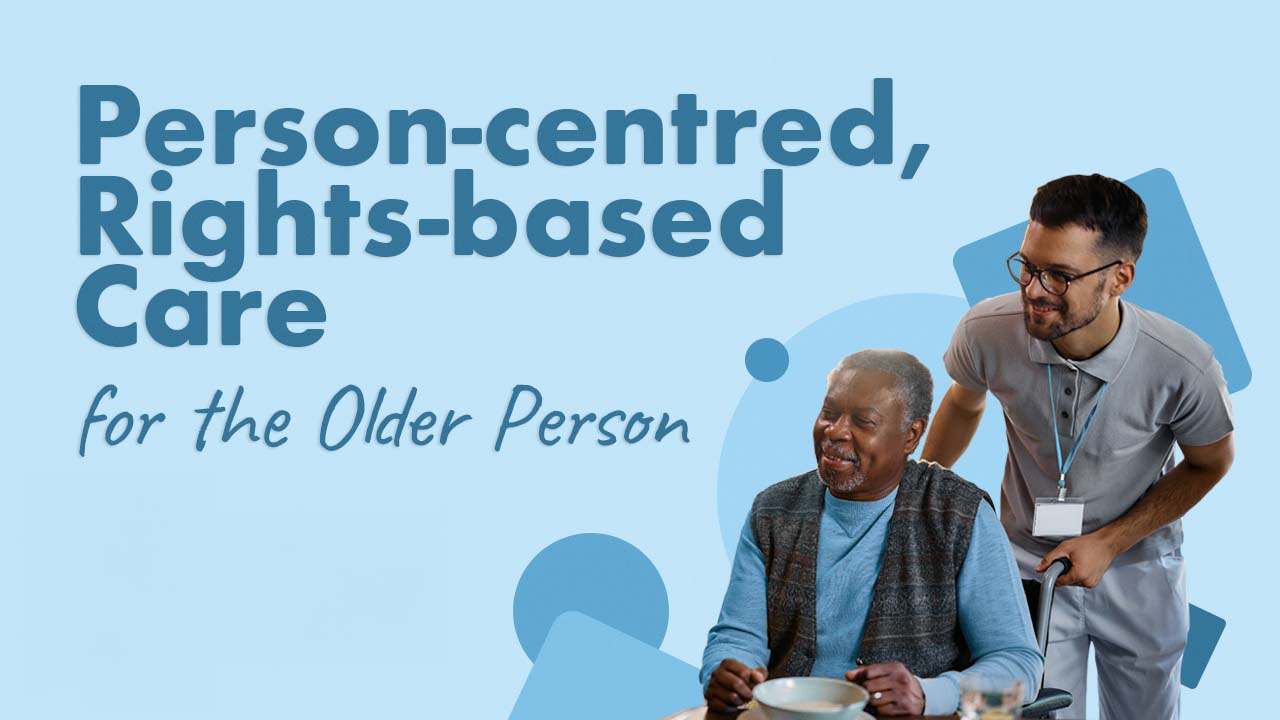


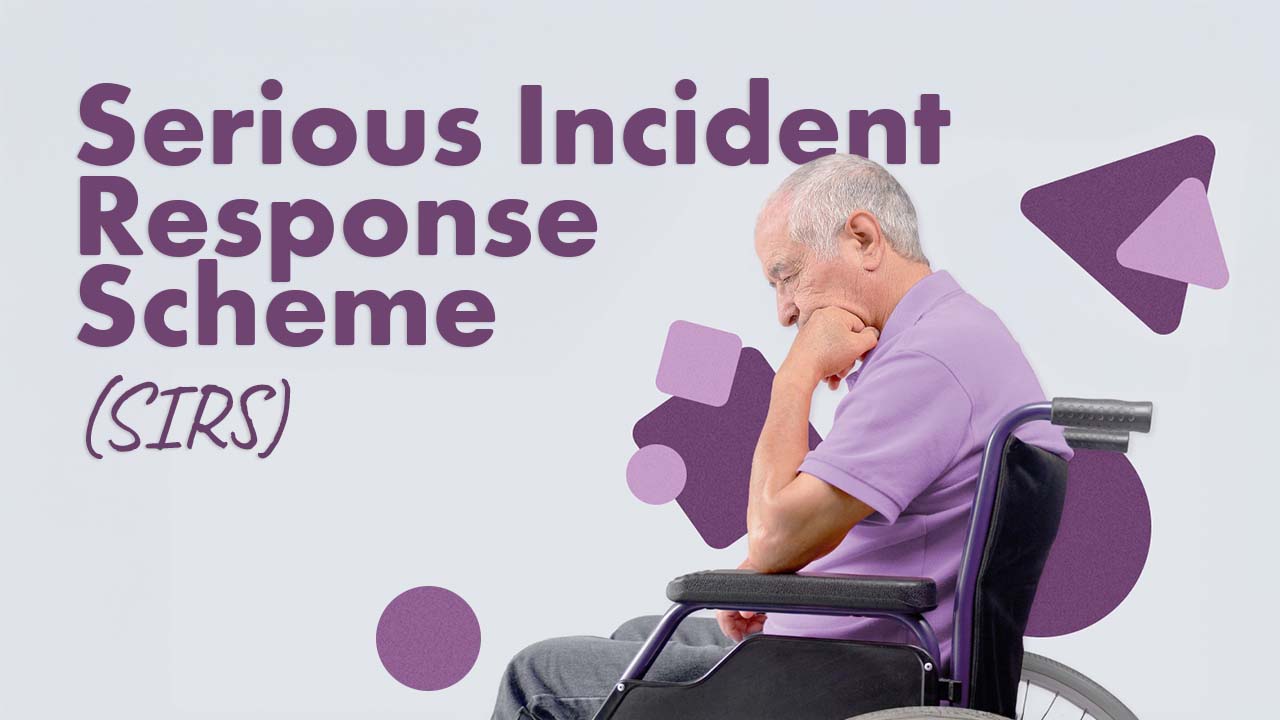


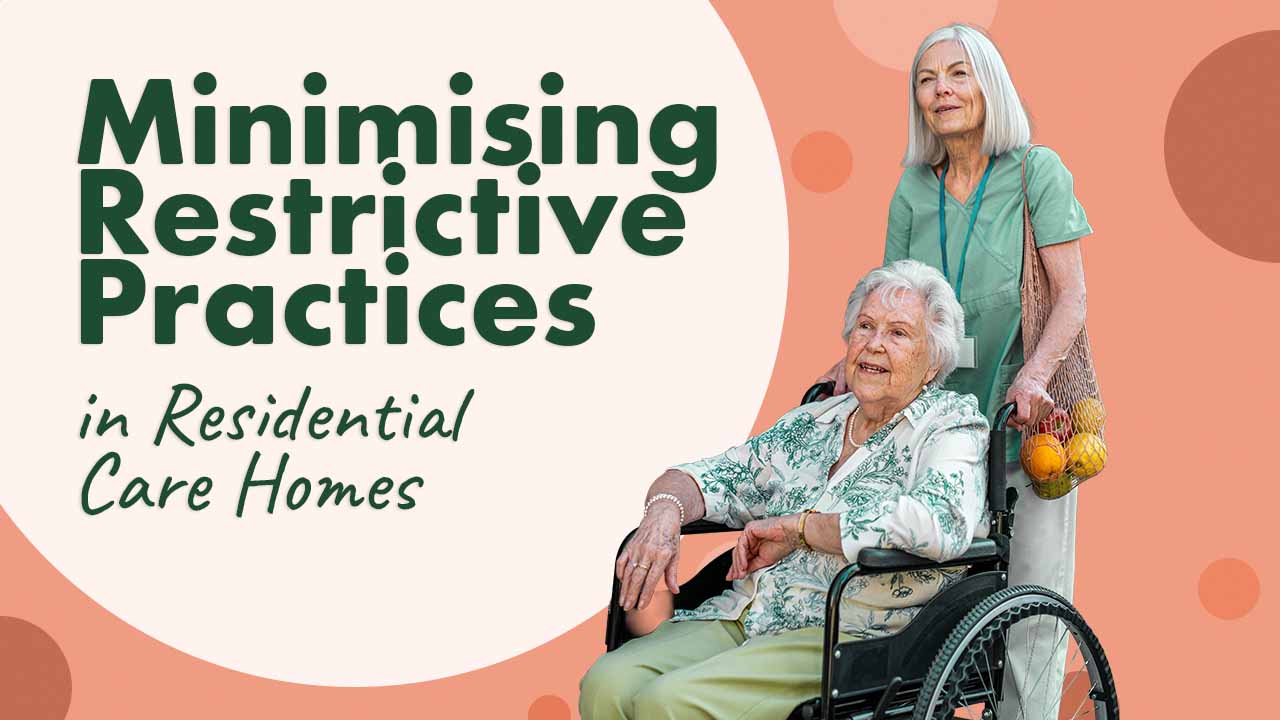







A sample from the Aged Care Library. Ready-made bundles such as Induction: Aged Care and Annual Mandatory Training: Aged Care give you a starting set, and Ausmed Learn™ assigns them in training plans by job role.
Explore the Aged Care Library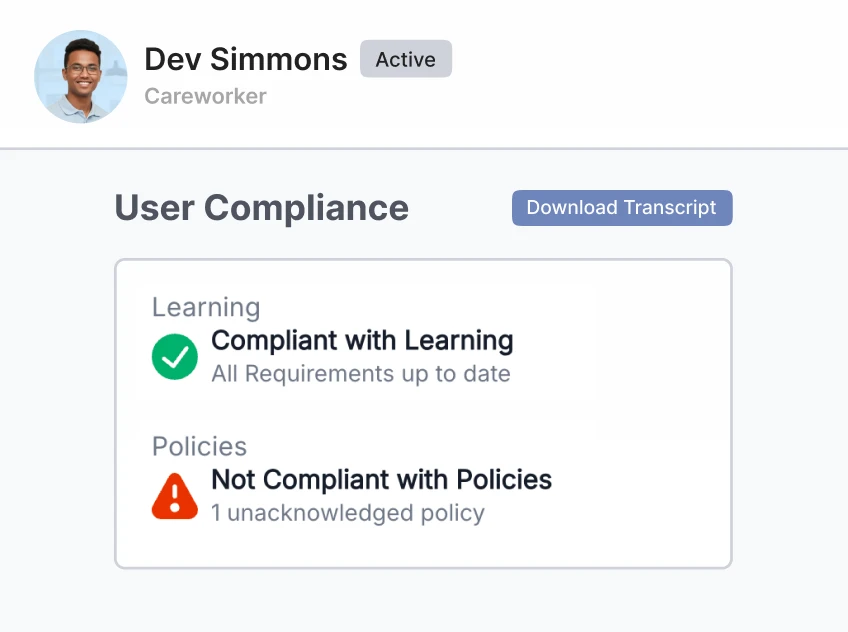
The Regulatory Standards report in Ausmed Learn™ maps learning records to the Strengthened Aged Care Quality Standards and shows coverage and gaps across all seven. Download it by team, job role, home or Standard.
A Standard with nothing against it shows up as a gap you can fill months before an audit. The same report shows the coverage you can already evidence.
Conformance is still judged on what happens in your homes. The report tells you where to look.
Discover Ausmed Learn™Action 2.9.6 lists five core matters, from person-centred, rights-based care to responding to medical emergencies. Ausmed Competency™ is aligned with Action 2.9.6: the module covers the knowledge, and the observed sign-off covers the practice.
Assessors work through a structured observation checklist on a phone or tablet and mark each element. The sign-off carries the assessor's name, a date and time stamp and comments.
Completing it marks off the linked practical activity in the worker's training plan, so one record shows both halves.
Discover Ausmed Competency™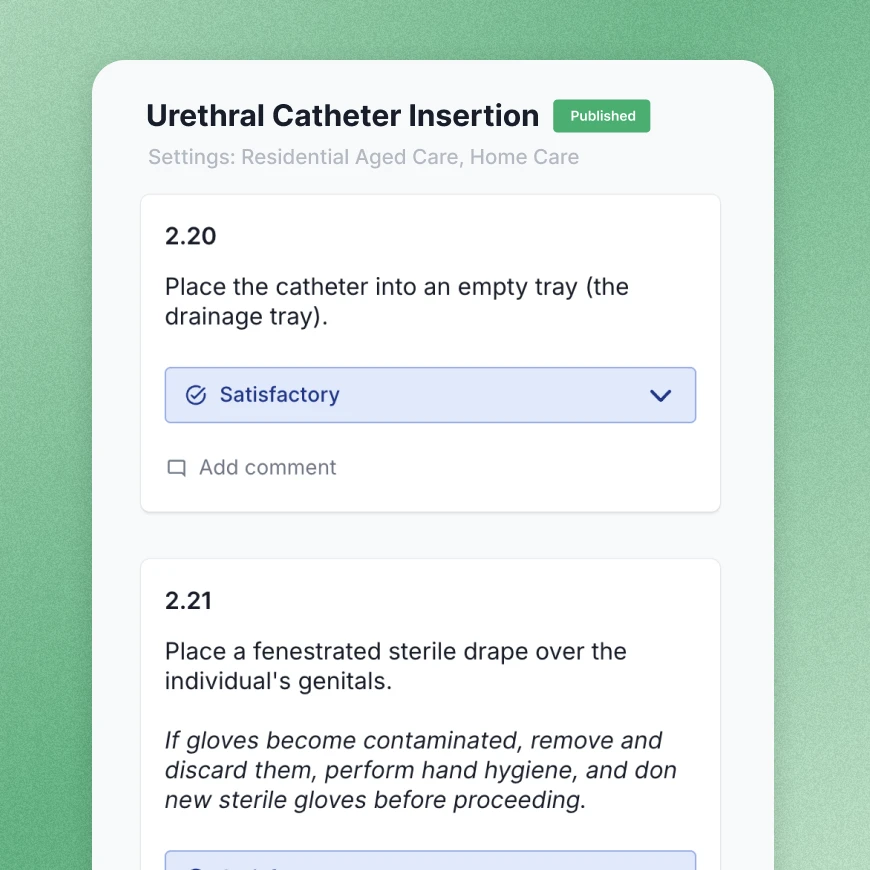
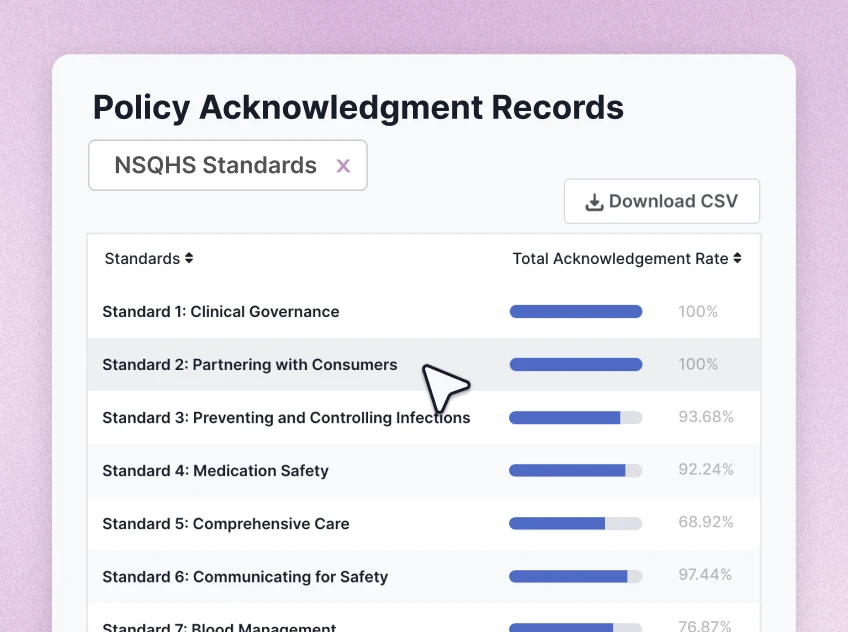
Ausmed Policy™ maps each policy to the Aged Care Quality Standards, assigns it by team, role or home, and records who acknowledged which version and when.
Under Action 2.3.7, that is your evidence that a policy is understood and accessible by the workers it applies to.
When a policy changes, publish the new version, keep the old one's records in its history, and ask staff to acknowledge the new one.
Discover Ausmed Policy™| Without a system | With Ausmed | |
|---|---|---|
| Finding training for a Standard | Search module titles and guess which ones fit | Filter the Library by Standard and action |
| Showing coverage | A spreadsheet matrix, kept up by hand | The Regulatory Standards report, by Standard |
| The 2.9.6 core matters | Online modules, with nothing to show the skill | Competency sign-off by a named assessor |
| Policies under 2.3.7 | A shared drive and a sign-in sheet | Acknowledgement by version, mapped to the Standards |
| Standards 6 and 7 | Easy to miss in a matrix shared between home care and residential | Training plans for the roles that shape meals and daily life in the home |

Baptcare’s Learning and Capability and Quality teams chose Ausmed for content that keeps pace with regulatory change. When the Strengthened Aged Care Quality Standards came in, Baptcare was already prepared.
Its educators say the palliative care and communication modules have deepened how staff provide care and communicate with the people they support.
Read the Baptcare story
What an assessor asks to see, action by action, and how to produce it.
Audit preparedness
Standard 5 in practice: clinical governance, infection control, dementia and palliative care.
Clinical care
Completion and overdue rates for each home, team and role, and Standards coverage.
Compliance reportingLeonnie Wickenden, L&D and Compliance Coordinator, Baptcare
Pick the Standard you're least sure of, and we'll show you what is mapped to it and what isn't.
All seven. Providers in registration category 6 must meet all seven Strengthened Quality Standards, including Standard 6, Food and Nutrition, and Standard 7, the Residential Community, which apply only to residential homes.
This page is about what each Standard asks of your workforce and the record Ausmed keeps for it. Audit preparedness is about producing the evidence when an assessor asks for it, action by action.
The Standard's words are competency-based training in the core matters. How you evidence that training is up to you. A sign-off by a named assessor who watched the work is evidence an assessor can check.
Under Action 2.8.1, the workforce strategy has to meet minimum care requirements, including care minutes and having a registered nurse on site and on duty at all times. Those are staffing requirements.
Training time is not direct care time and does not count toward care minutes.
Ausmed is a Trusted Information Partner of Healthdirect Australia. Verify here.